2026 Calendar Information
Thanks for buying a Brick of Chicago desktop calendar! I’ve long wanted to make more pictures and information about the buildings I feature. Scroll down to learn more about each building and see more pictures of the featured building and others like it! Click on an image to enlarge it.
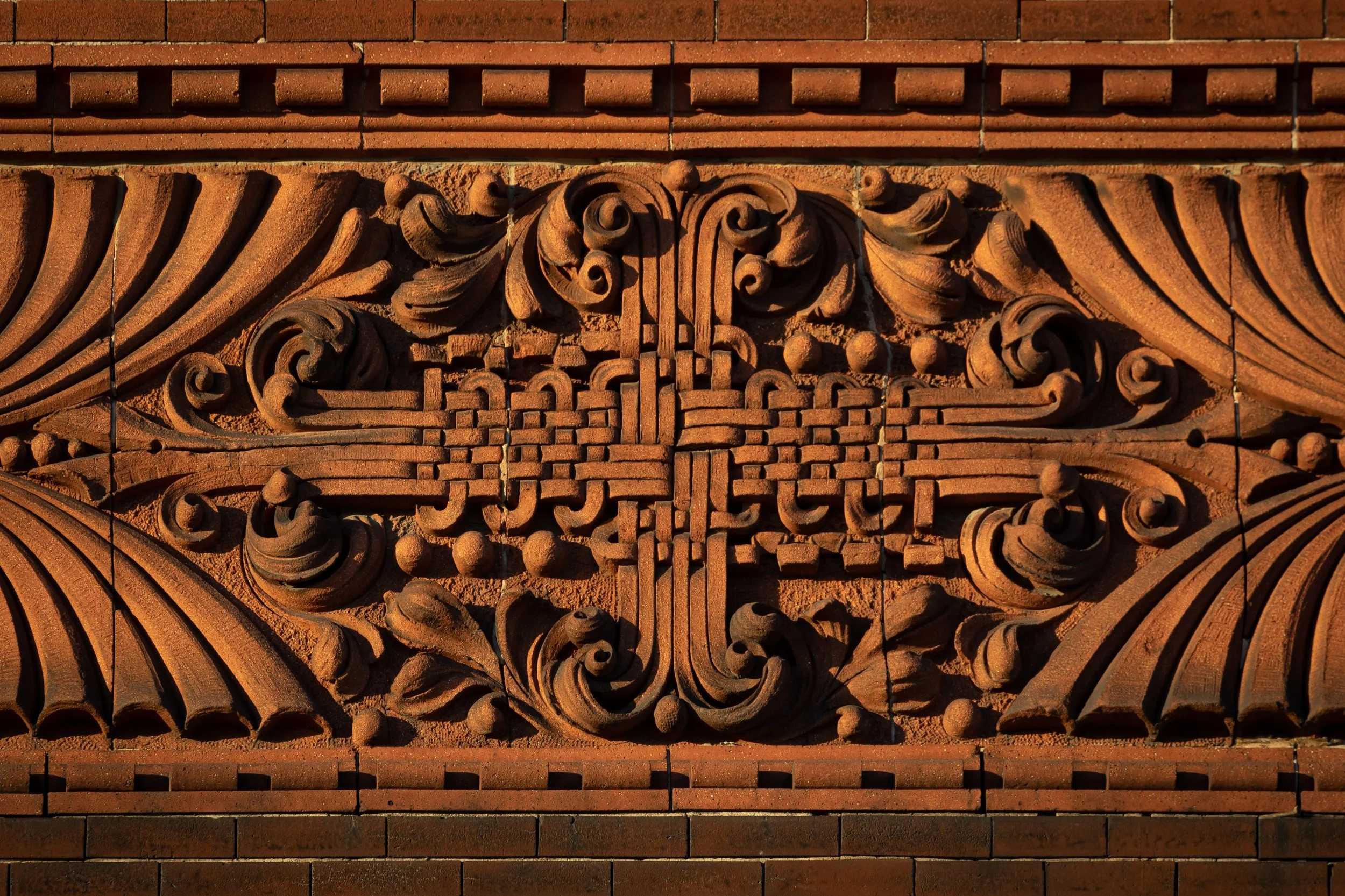
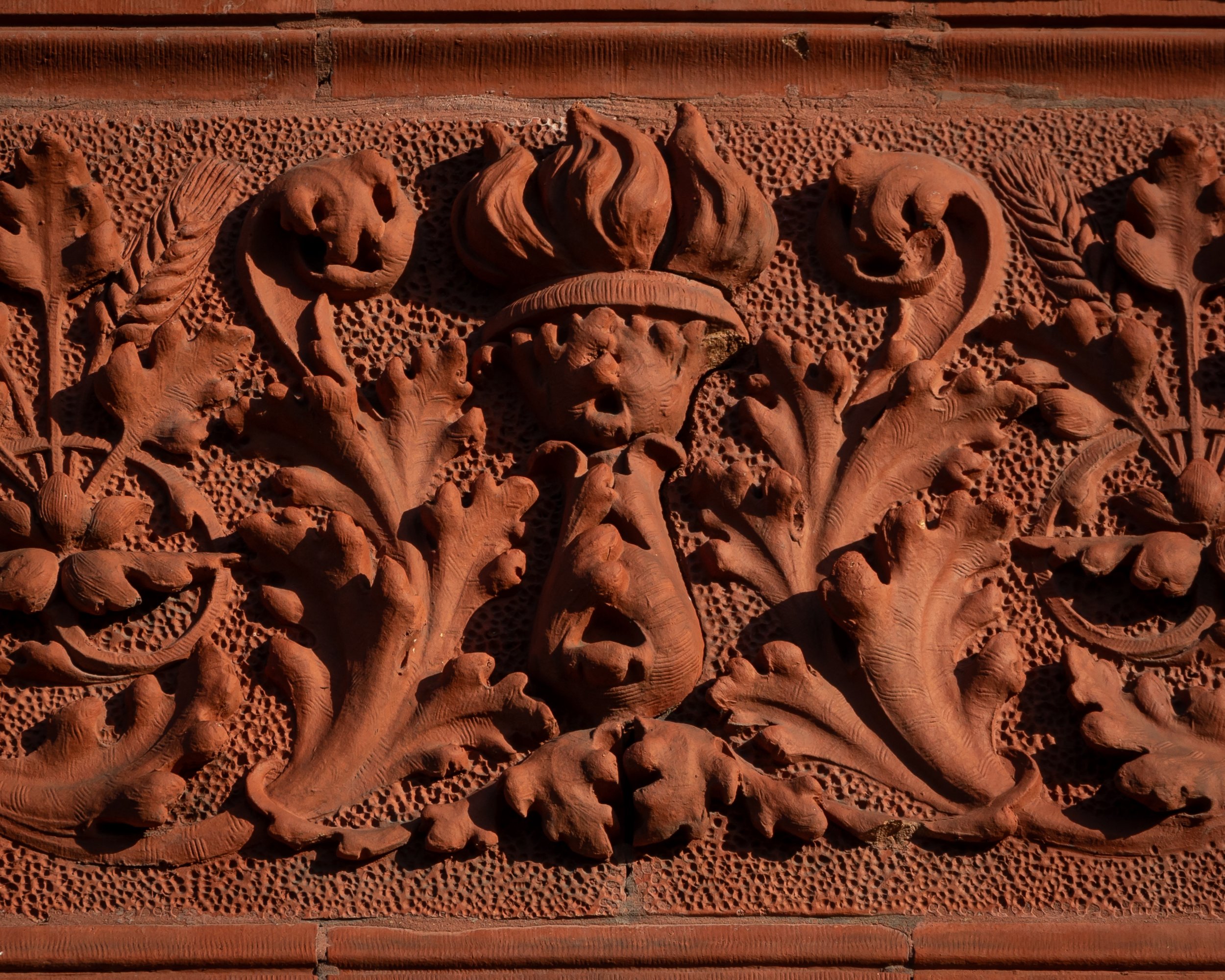
The Cover - 19th Century Terra Cotta
Terra cotta, Italian for “baked earth”, is clay that is sculpted into a decorative block. Many of those pieces are then molded and copied. Throughout the 19th and early 20th centuries, terra cotta allowed architects in Chicago to add a tremendous amount of decoration to their buildings at a much lower price point than carved stone. 19th century terra cotta is usually defined by very dense detail, plant forms, and an unglazed red color. While architectural later terra cotta would be glazed, industry experts in the 19th century recommended leaving the terra cotta unglazed to better emulate the look of sandstone.
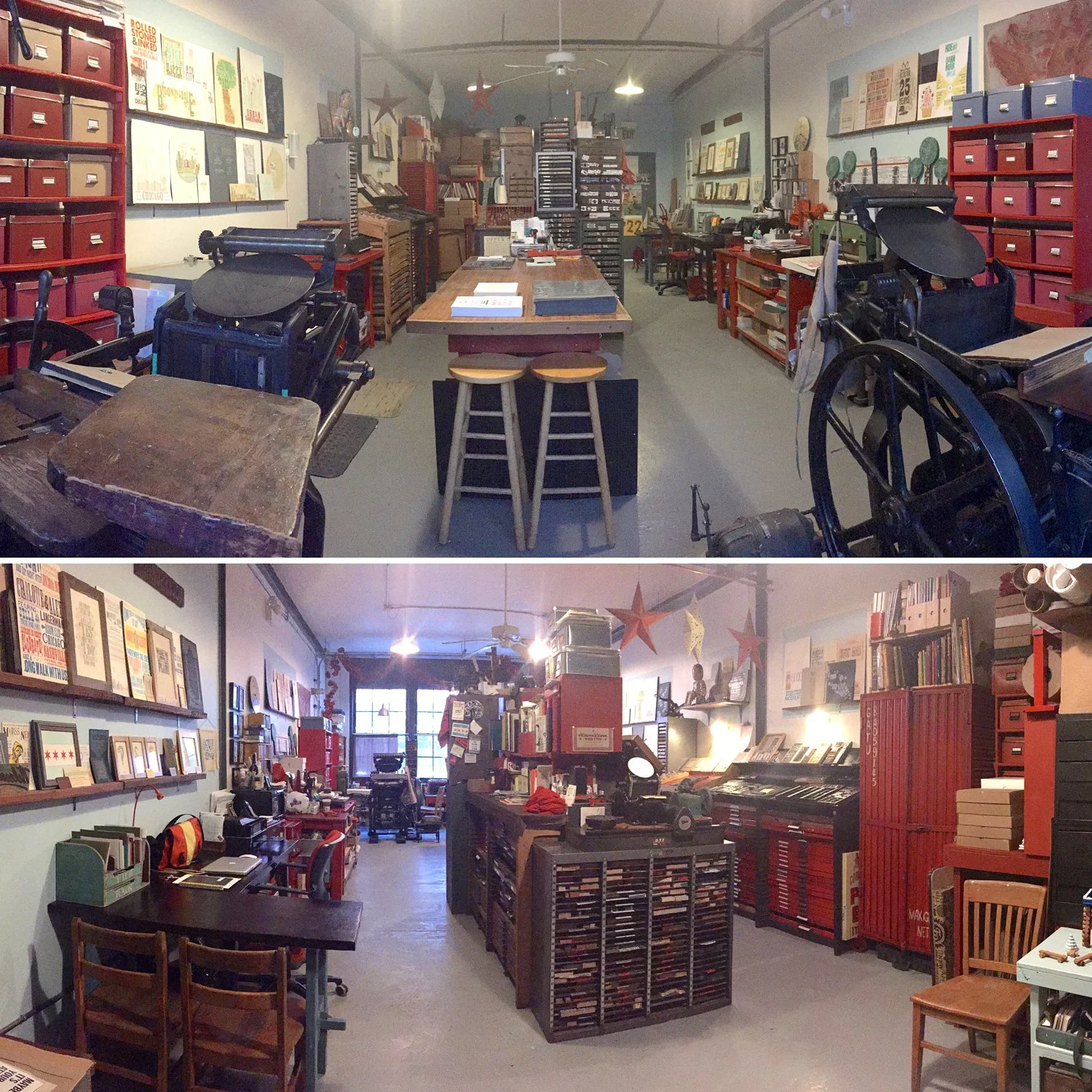
The cover was designed and printed by Starshaped Press in Ravenswood. Jen has been making art out of metal and wood type since 1996 and we’ve been collaborating on the cover since 2020. Each year I send her some inspiration images and she digs into her collection of type to create something amazing. Learn more about Starshaped HERE

January - Ignotz Ristorante
Chicago’s traditional Little Italy neighborhood lies along Taylor St. near UIC, but there is another, smaller Italian enclave tucked a few miles away between Pilsen and Little Village. Centered on 24th and Oakley in an area now occasionally refereed to as Heart of Chicago, the neighborhood was once a hub of Tuscan immigrants from Northern Italy. While the surrounding neighborhood has changed, a string of Italian restaurants have remained while newer ones (like the relatively young Ignotz, founded in 1999) have joined them and the street continues to bustle with great Italian restaurants catering to diners from near and far.
This building is right next door to Ignotz (hence “One Door South”) and is used as their event space—I’ve actually had someone tell me they had their wedding here after seeing the picture in the calendar! The building was probably built in the early 1960s as evidenced by the lovely blue glazed brick. Glazed brick soared into popularity in the 1960s as a way to make modern buildings more inviting and friendly and as a way to make a structure simply stand out from the crowd. Check out some other midcentury examples of glazed brick from around the city below


February - Goose Island Barrel House
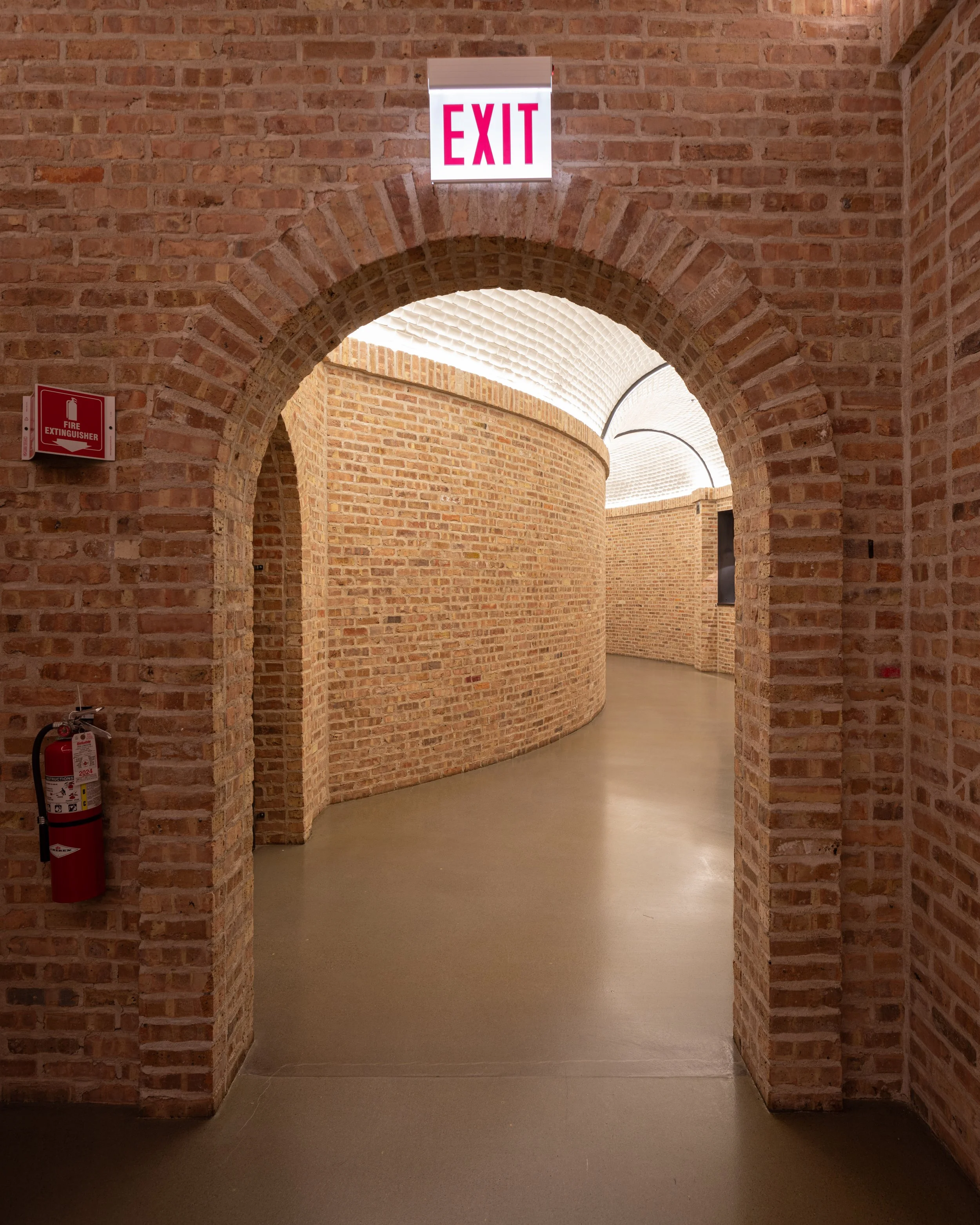
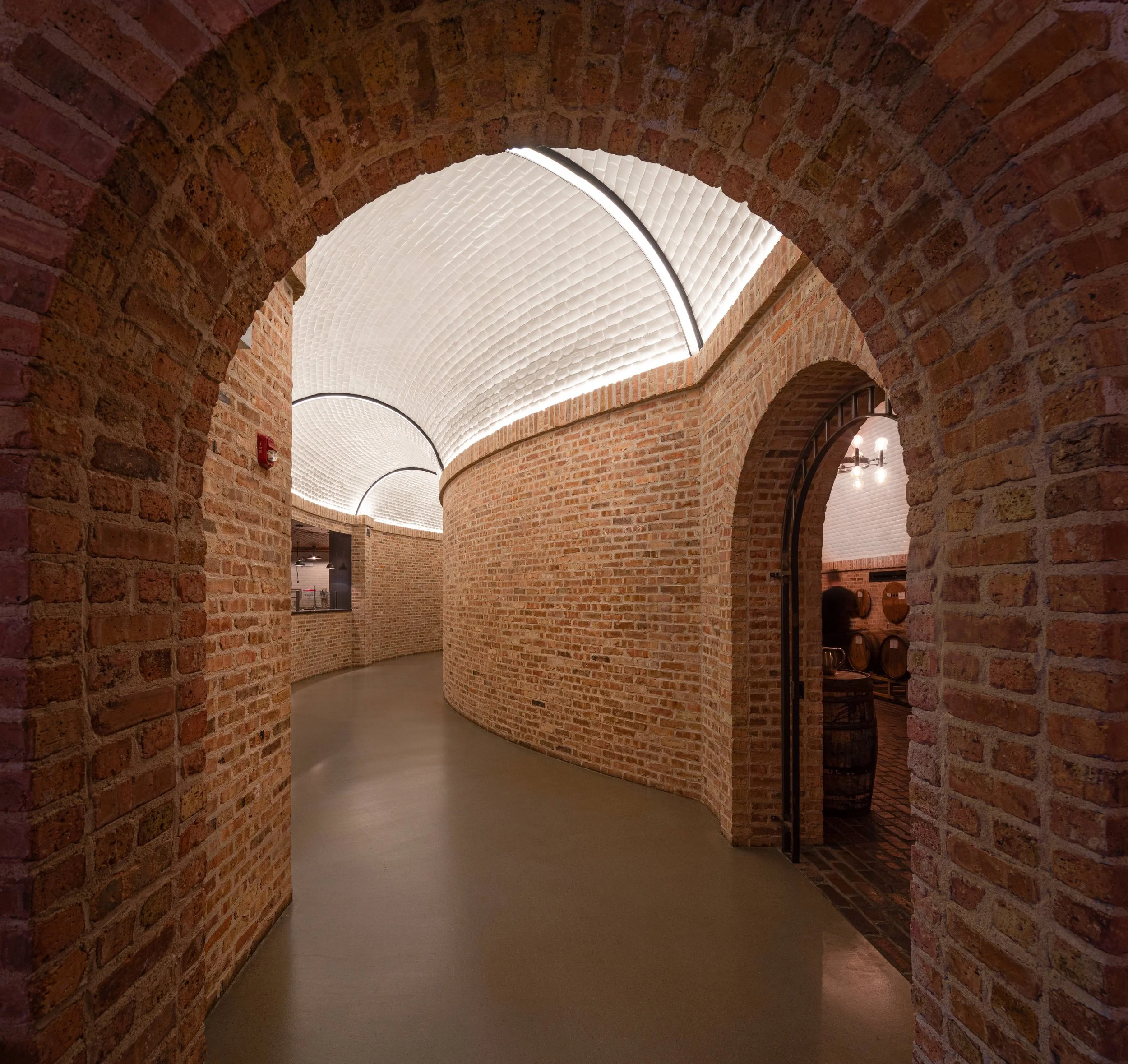
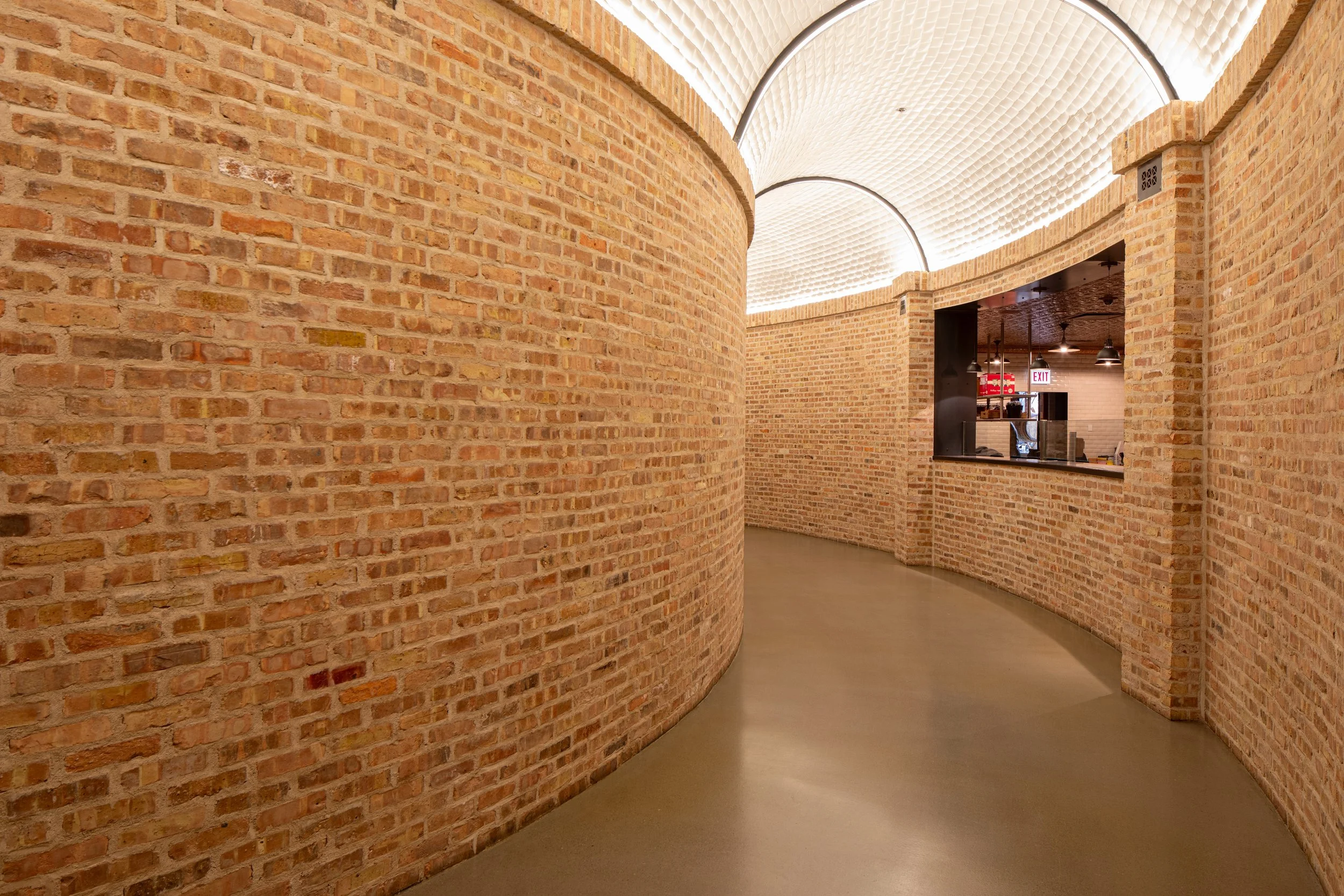
Goose Island began brewing beer in Chicago in 1988 and expanded to producing barrel aged beers in 1992 after buying several old bourbon barrels from Jim Beam. Goose Island stores these barrels in a 1940s industrial building just south of Humboldt Park. The walls of the simple building are covered in rough-and-ready Chicago common brick left unadorned. A few years ago Goose Island decided to add in an event space, tasting room, and kitchen to the old building and hired Space Architects and Planners to create a new space that evoked an ancient European wine cellar.
Space designed the spaces off of a wandering hall clad in reclaimed Chicago common brick and topped with a white tile barrel vaulted roof. Reclaimed Chicago commons are taken from demolition sites and reused on new buildings to give them an air of gravity and history. It’s a perfect fit for this project!

March - The Villa
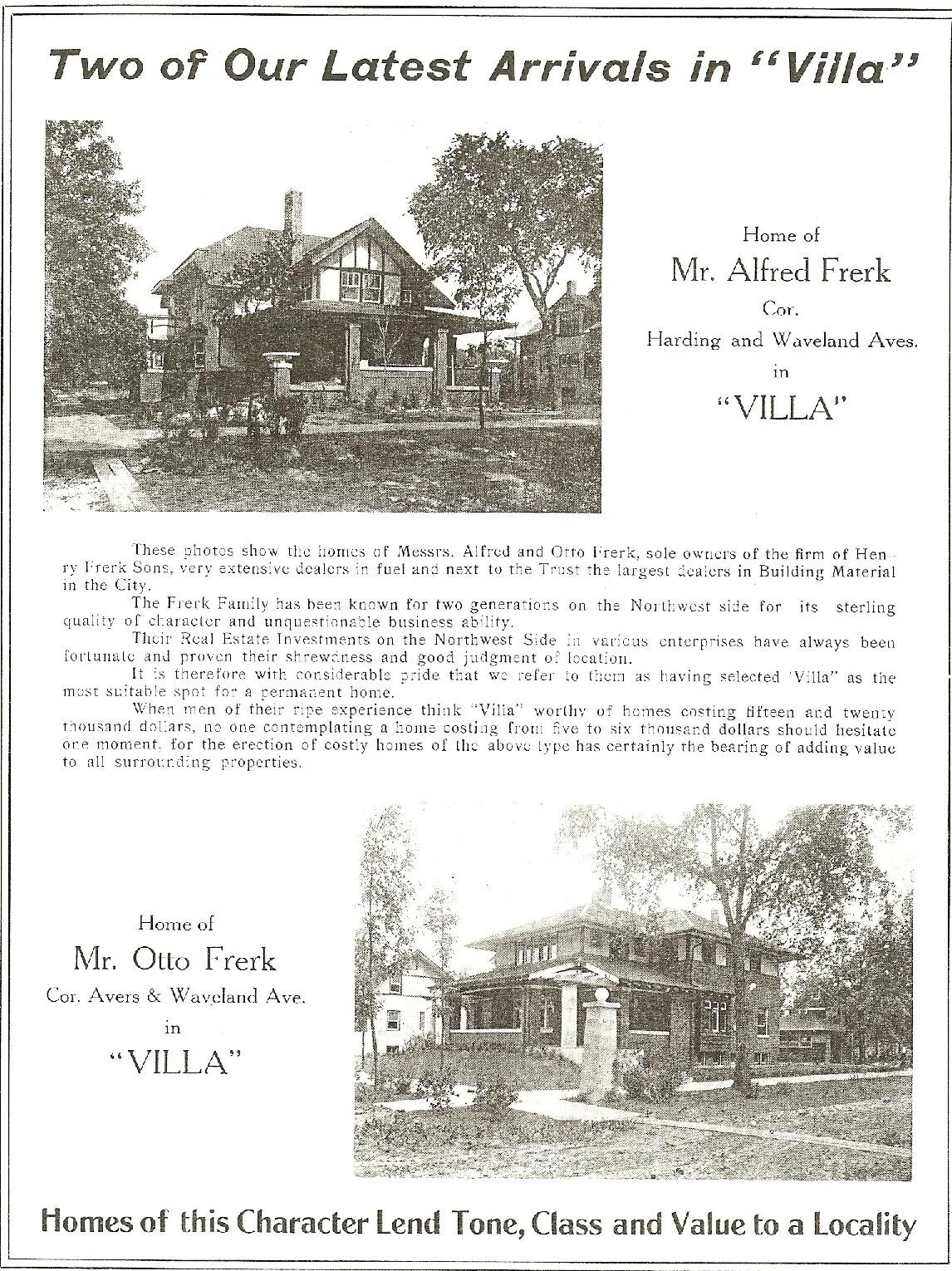
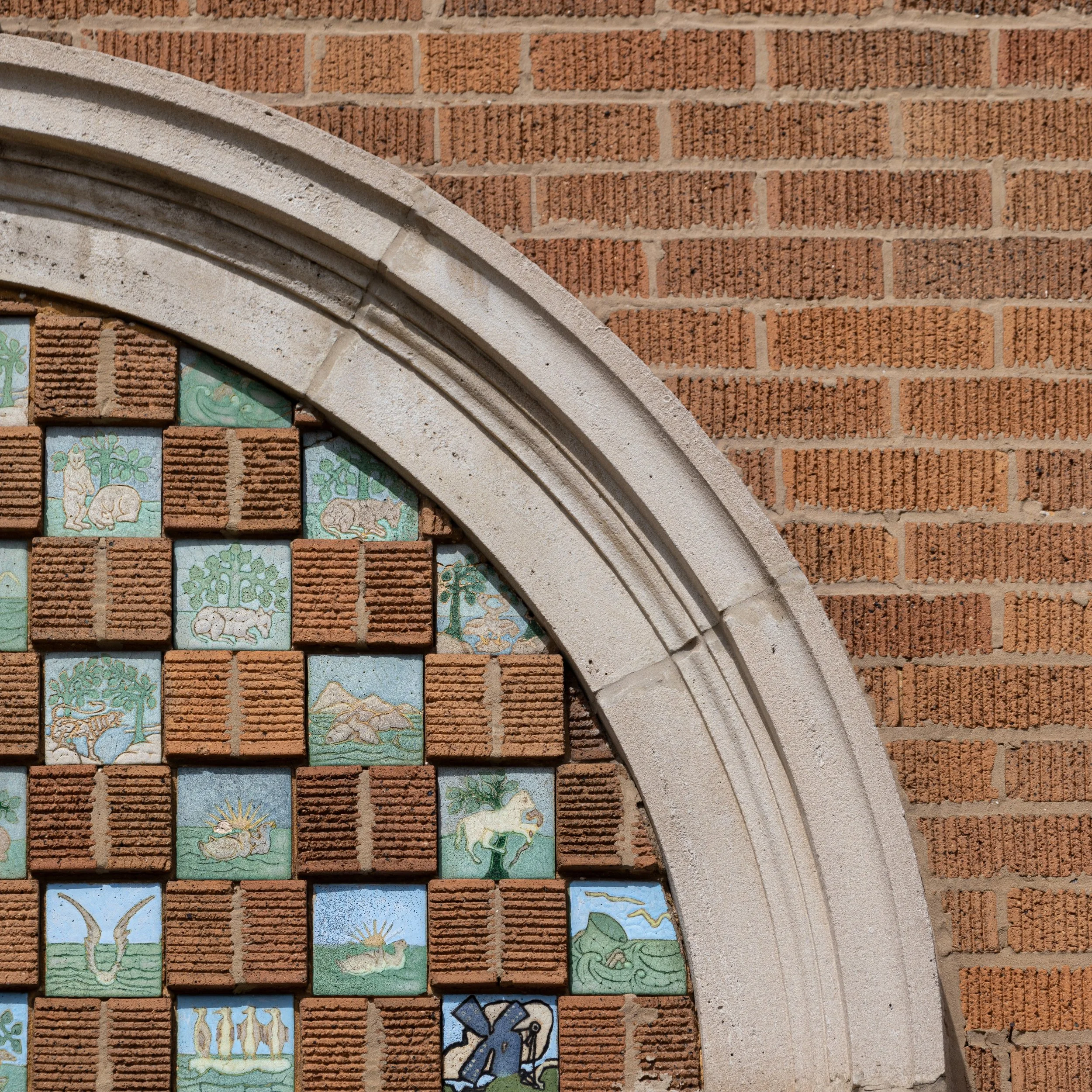
The Villa is a funny little neighborhood within a neighborhood, a place full of wonderfully ornate large homes thanks to a selective group of developers who added in green boulevards, 50 foot wide lots, and a stipulation that no house could be sold for less than 2500 dollars. Architects and builders responded with large homes in a variety of craftsman, prairie, and revival styles that are all architectural showpieces. This one, located at the corner of Harding and Addison, is rough brick along the base with a band of stucco above. The home stood out to me thanks to the arched entrance dotted with decorative tiles and brick.
The tiles that fill in the arch above the entrance were made by the Grueby Faience Company of Massachusetts, a company that should be familiar to any die-hard Antiques Roadshow viewer. They made art ceramics of all kinds and were known for their rich colors, especially their green. Grueby was heavily intertwined with other Arts and Crafts artists, creating pieces for Tiffany and Co, Gustav Stickley, and more. Check out the pictures to see an period ad for Villa homes (owned by brick mortar suppliers Frerk and Sons!) and standalone examples of Grueby tiles that can be found on this house.


April - Starsiak Clothing
The Starsiak Clothing building was built in 1936 at the middle of the bustling Polish Downtown. The sweet little Art Deco gem is covered in cream and gold terra cotta with shallow details for decoration. The Art Deco movement introduced a simplicity of design and a smoothness of line that could be perfectly rendered in glazed terra cotta. The large blocks of terra cotta could reduce a facade down to one color of few units, save for a few standout details.
Starsiak was founded in 1916 and sold and made men’s clothing until they shuttered in 1981. Most recently the building was home to a running supply store whose sign covered the old Starsiak text. When that store closed in 2018 the sign was removed and the beautiful text returned. Graphic designer Steve Shanabruch has made a font based on the sign, and you can download it here (Steve also designed my logo and branding!).




May - Frederick Schock House
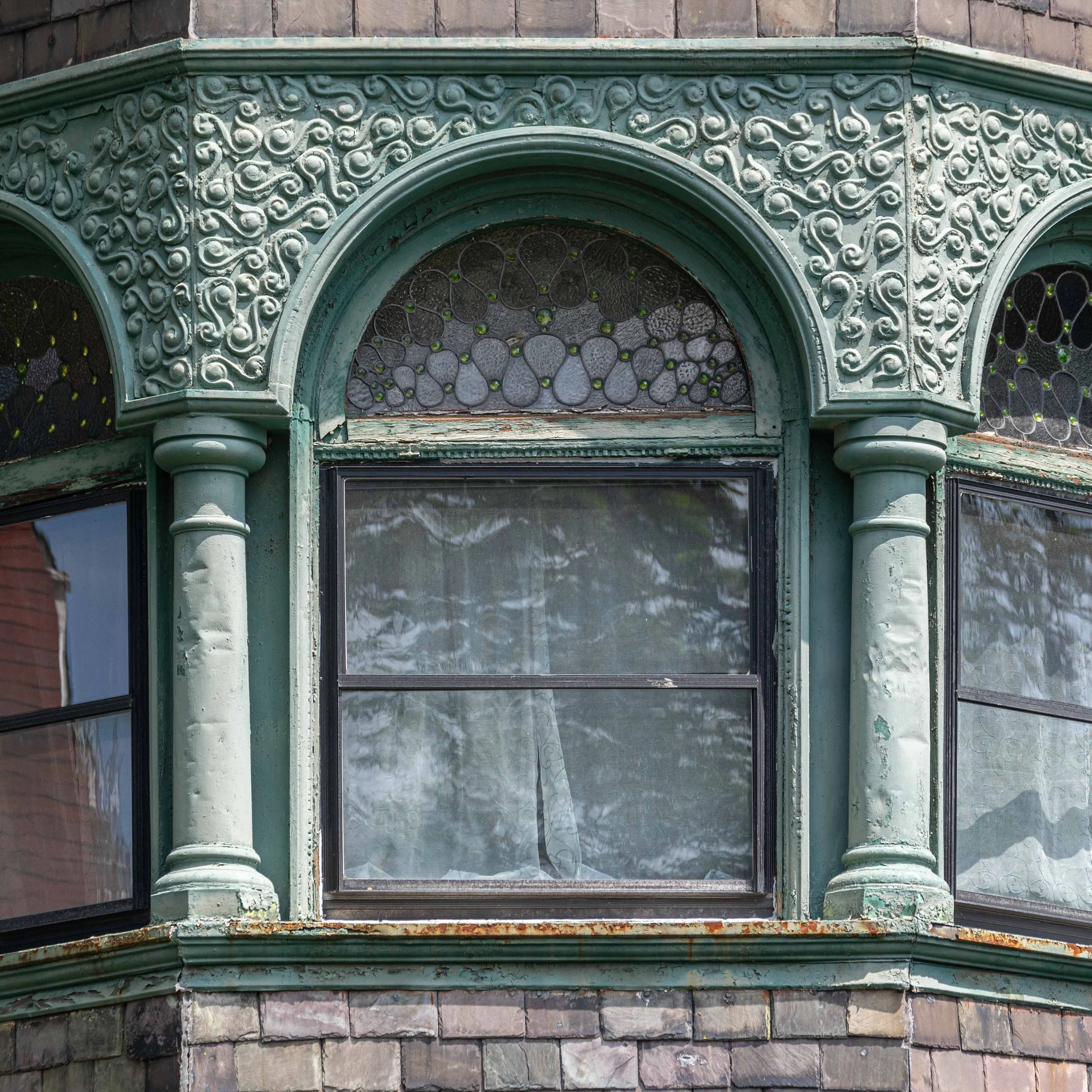
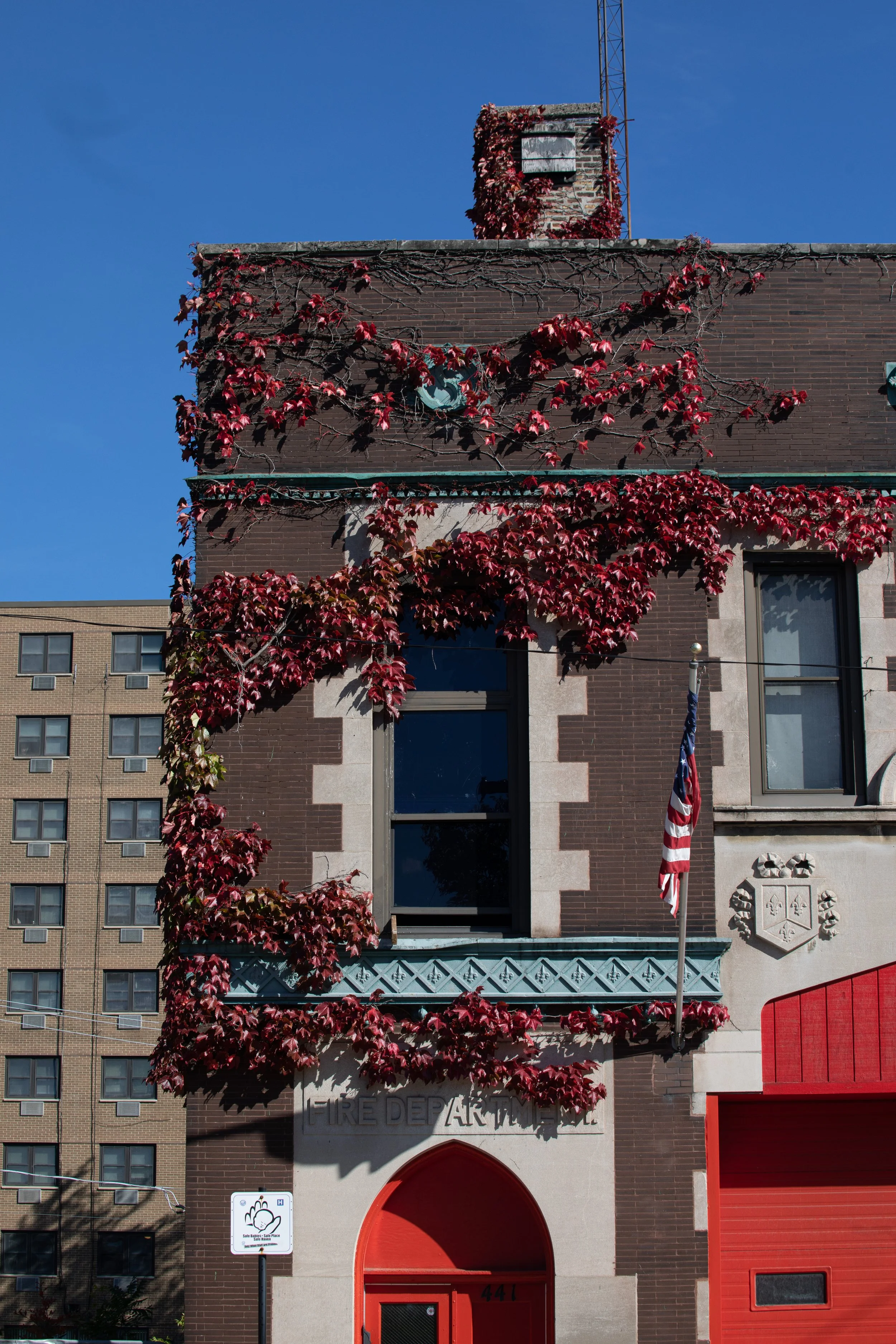
Architect Frederick Schock designed this house for himself in 1886 in Austin, then a suburb just to the west of Chicago. Schock was Austin’s most prolific architect, designing dozens of homes, mansions, and commercial buildings in the bucolic and leafy town, including its celebrated fire station just a few blocks away. Schock stuck around in Austin even after it was annexed into Chicago in 1893 and continued practicing architecture and lived in the house until his death in 1939. Not content with just designing his own house, Schock also designed the three houses west of his at a pace of one a decade, each in a different style that reflected the fashion of the time.
Schock’s house is a riot of material and design. The bottom story is covered in rough pitted limestone and smooth red brick, while the upper stories are clad almost entirely in slate. The slates evoke the classic American shingle style architecture, but I have to admit I have never seen it done in stone slates before! The large houses along W Midway Park are a testament to passionate architects as well as passionate homeowners who have poured their blood and sweat into the upkeep of these historic homes and keeping Midway Park one of the best residential streets in Chicago.

June - Richardson Middle School
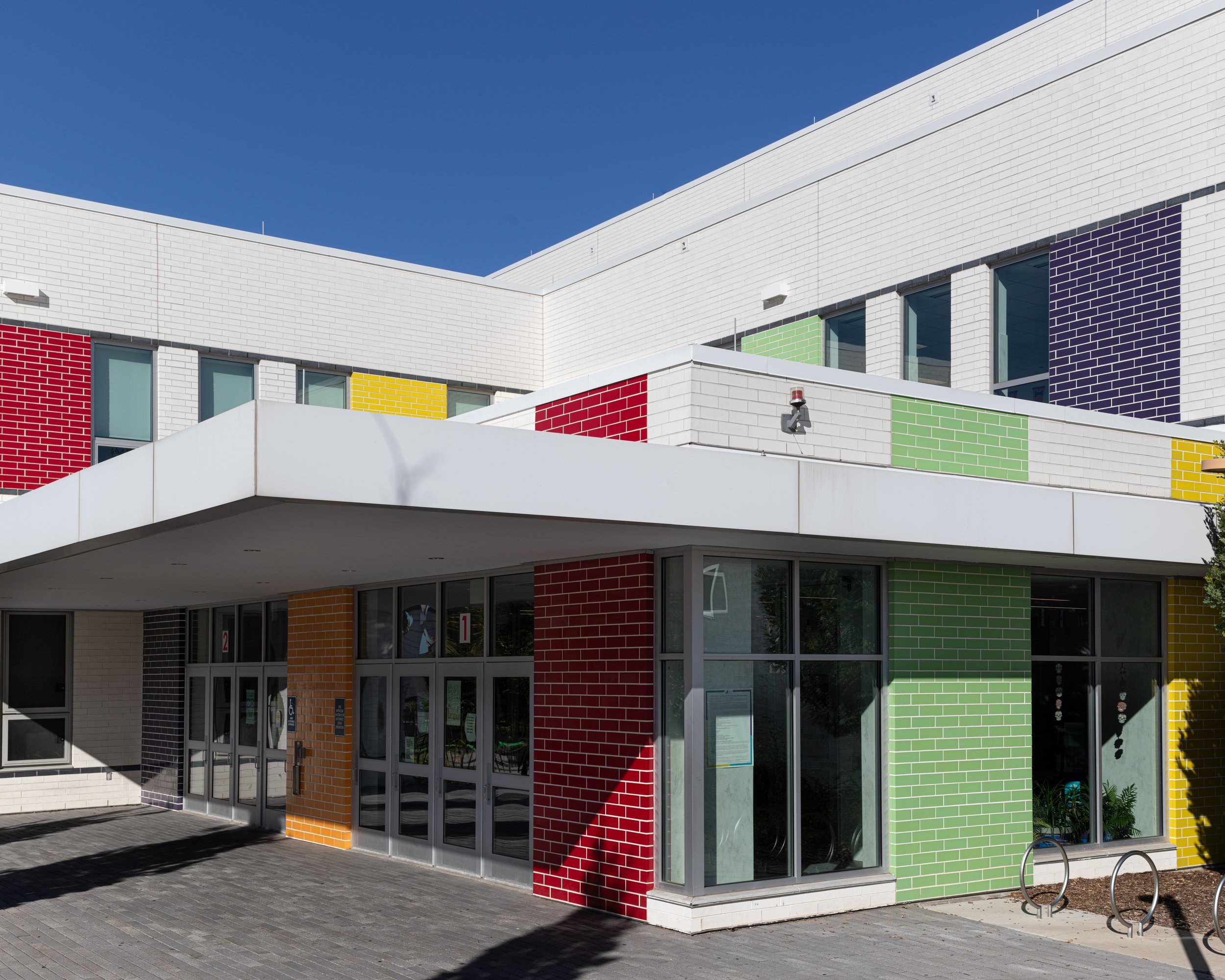
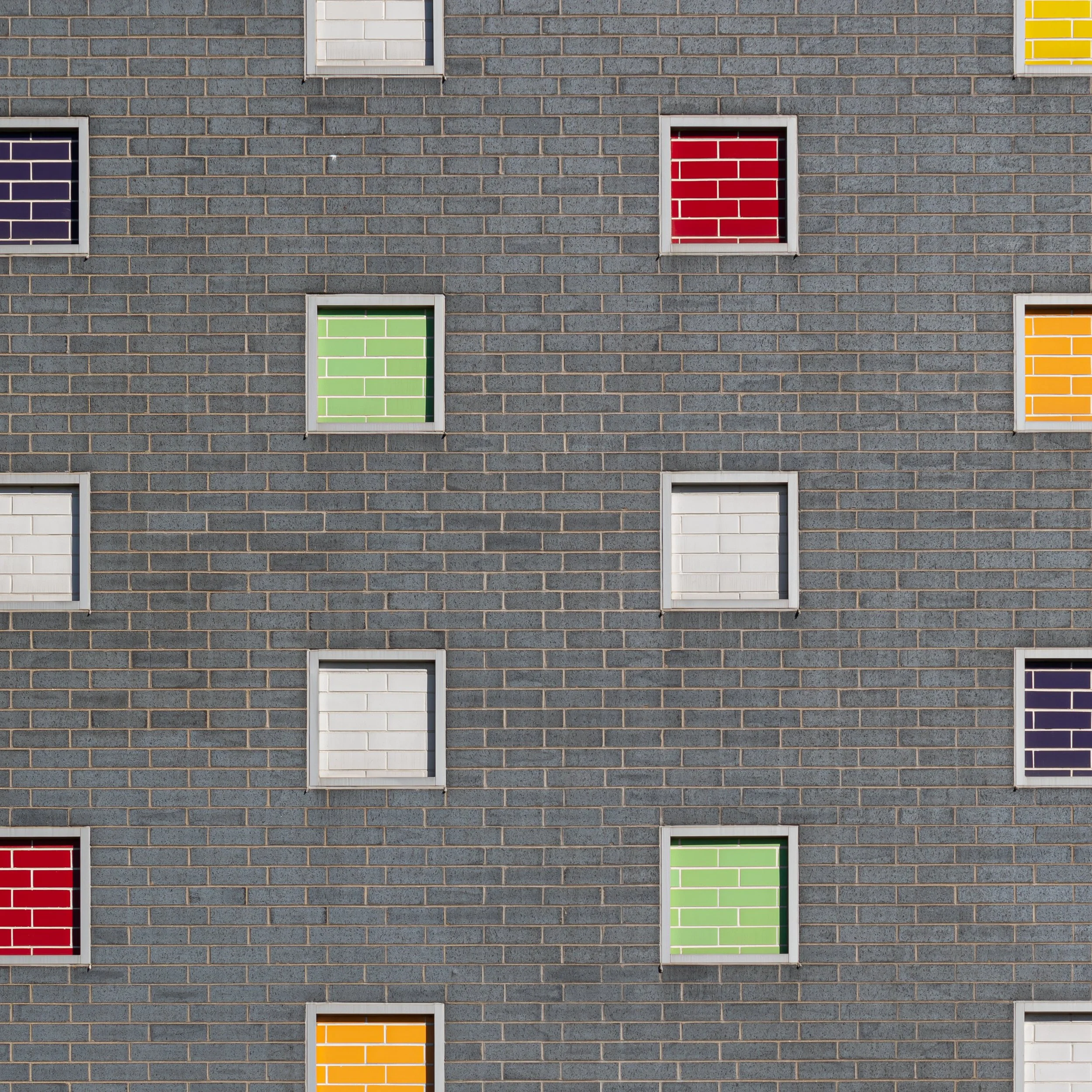
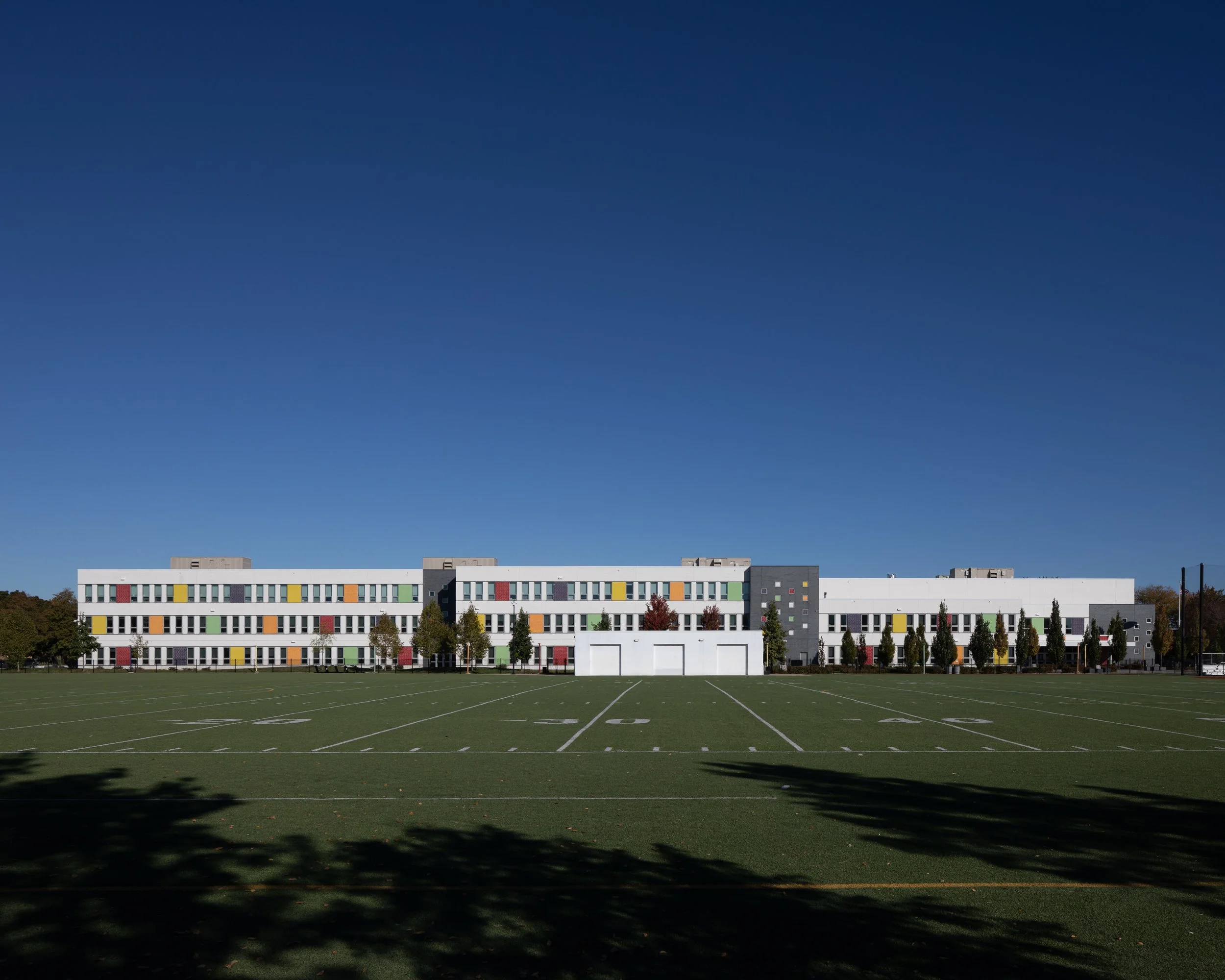
Richardson Middle School is a new school building serving the southwest side of Chicago. Designed by STR Partners, the school is covered in bright strips, panels, and dots of colorful glazed brick. School architecture is an area where brick has continued to thrive over the last few decades despite the material’s general decline in use. So many hundreds of students cause so much wear and tear on a building and brick can really stand up to the abuse. Glazed brick, furthermore, adds color and fun to a building and can take a somewhat generic structure and make it immediately read as a school.
I love the range of colors of Richardson and hope it is a step towards more glazed brick in Chicago architecture!

July - The Gap
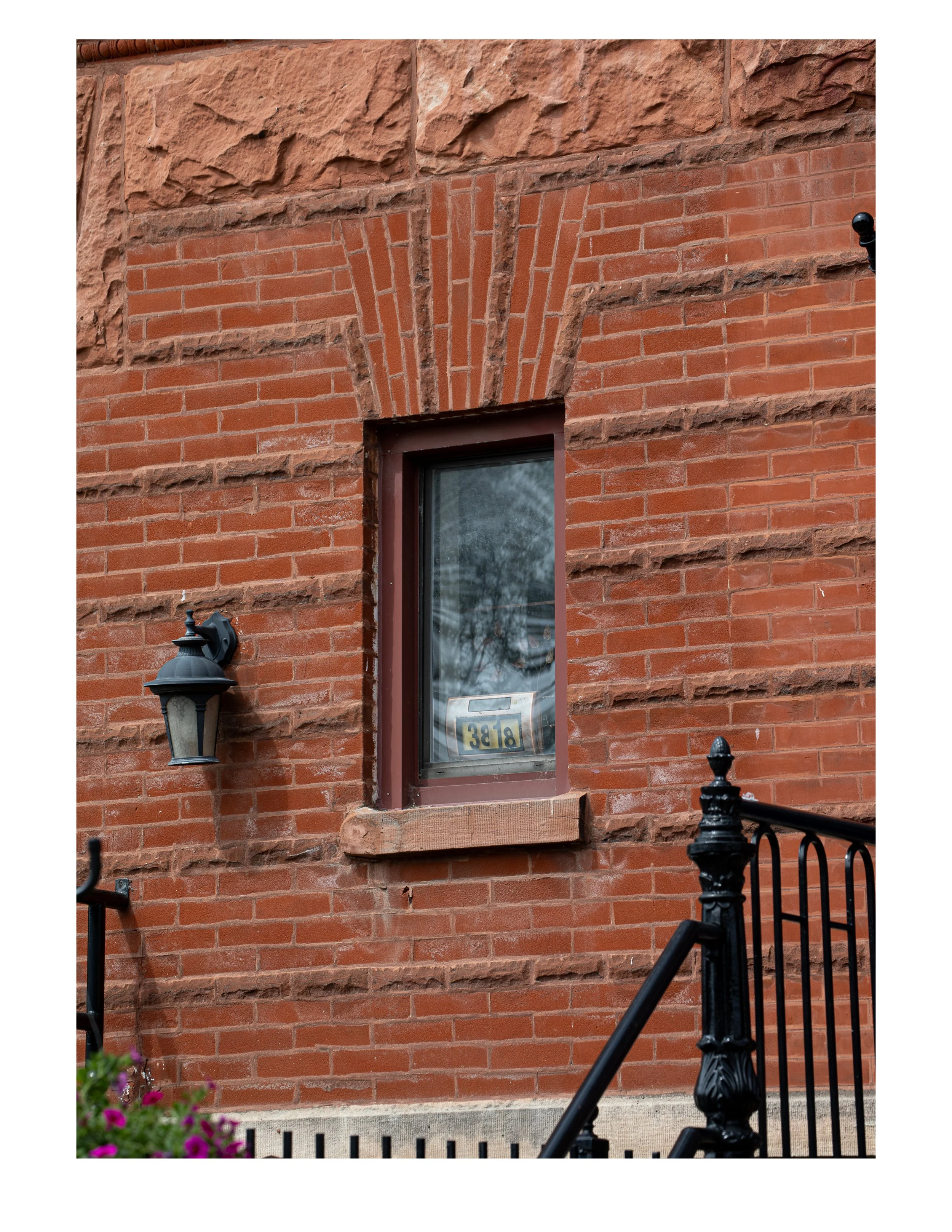
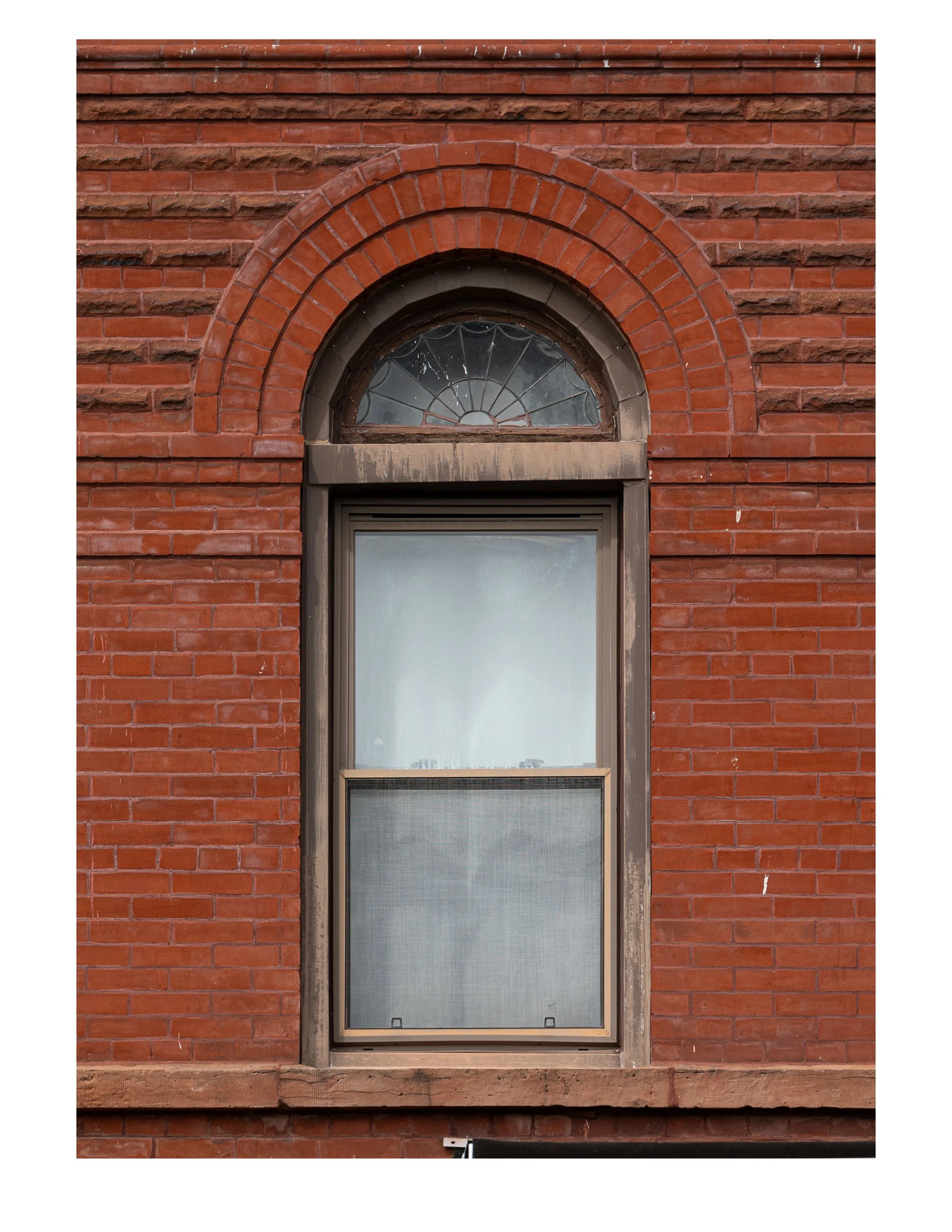
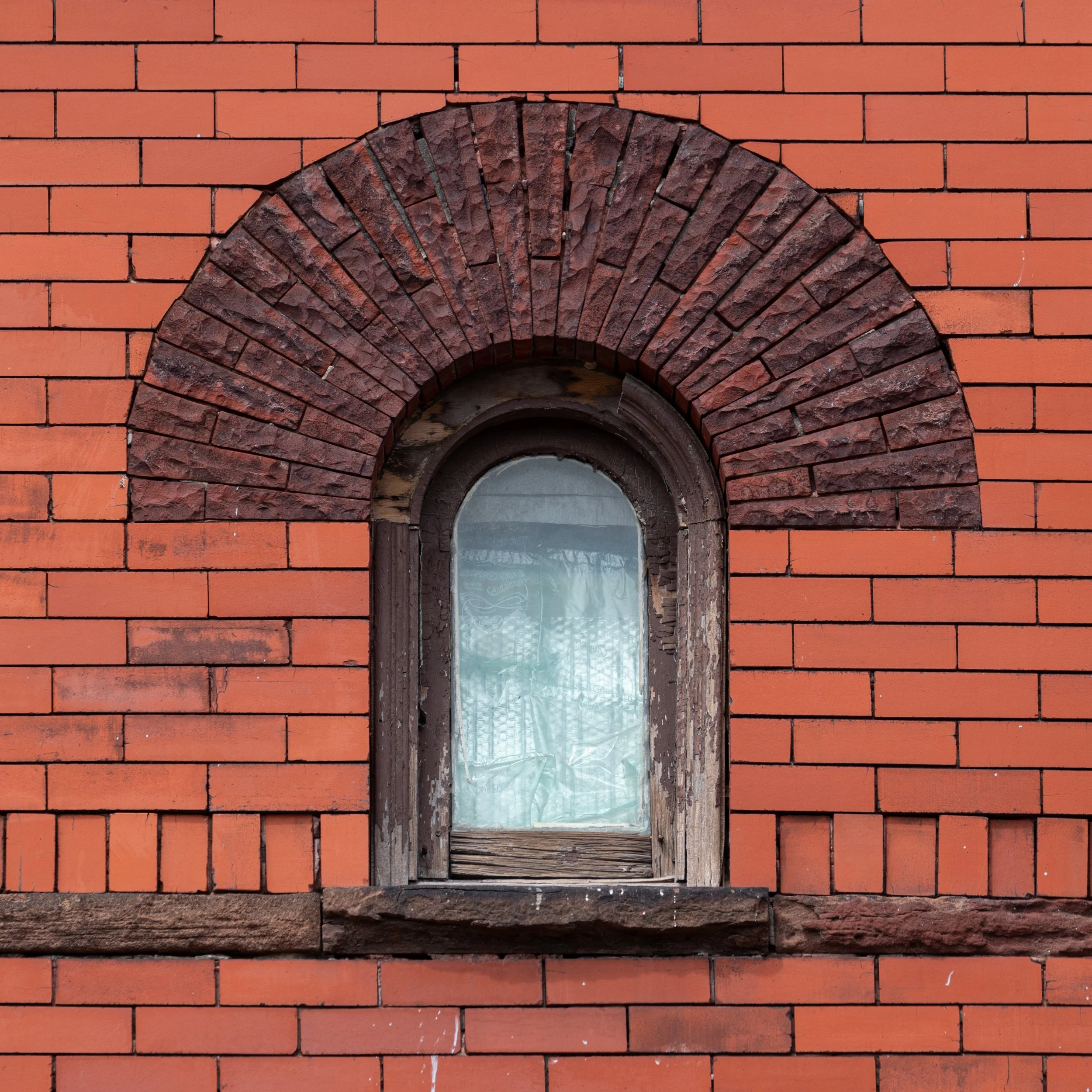
An unusual sight in fire-phobic Chicago-row homes! By the early 20th century building codes made it much more economical to build detached homes and flats, but some 19th century examples were built and still remain, most famously in places like Pullman and Lincoln Park. For my money, the best examples are in in a few block stretch of Calumet and Giles in Bronzeville, and area referred to as The Gap because it somehow survived the wrecking ball that took out so much of the surrounding neighborhood in the 50s and 60s.
This row on Calumet between 38th and 39th was built in two phases; The further buildings were designed by Charles Palmer and built in 1888 and the closer were built in 1891 and designed by John T Long. All are covered in crisp red brick with many individualizing details made in molded bricks and terra cotta. Stepping onto the block truly feels like stepping back in time or into the east coast for a moment.

August - Kenwood Gardens
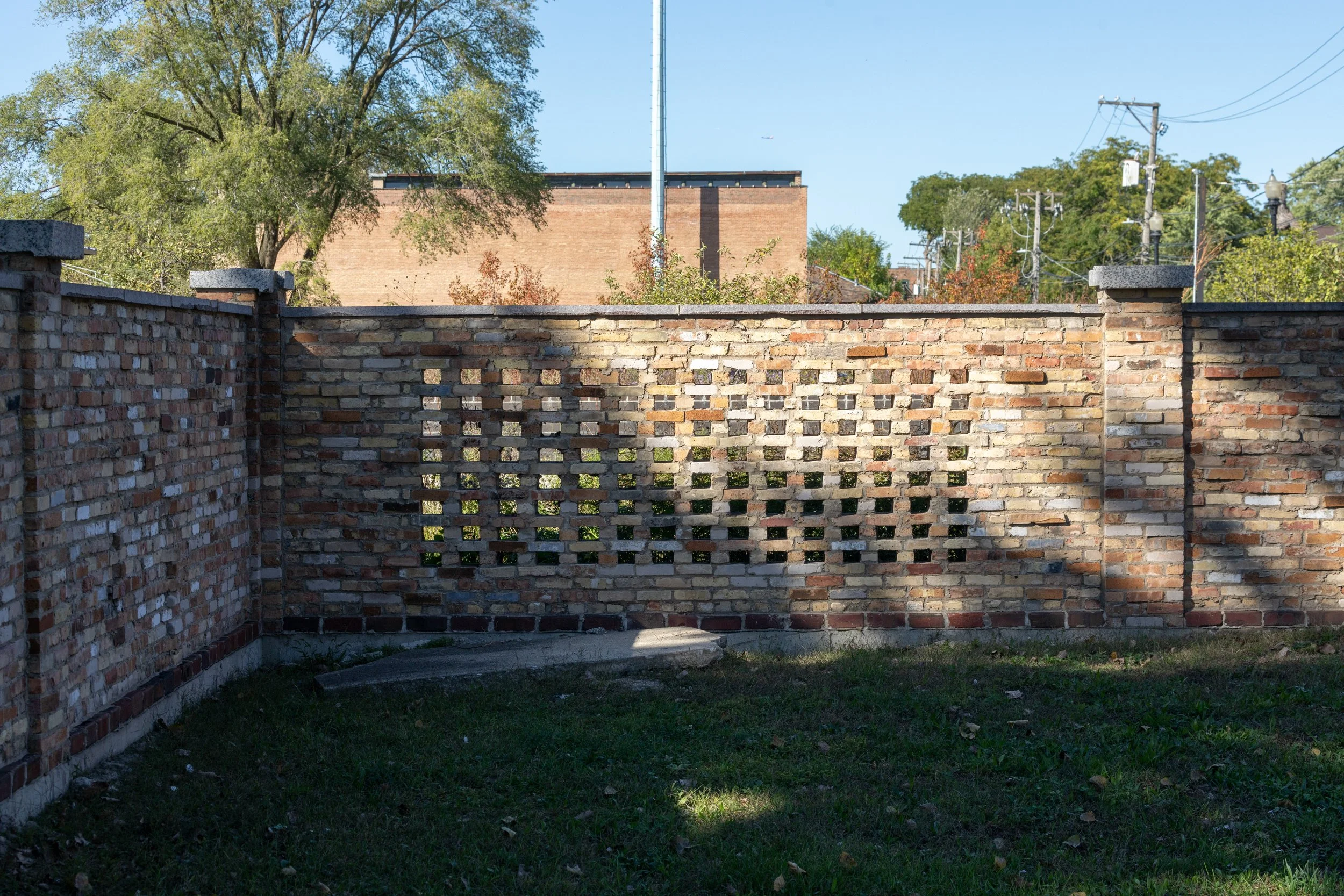
The bricks pictured here line the walls of Kenwood Gardens, a meditative space put together by the artist Theaster Gates and the Rebuild Foundation, but the bricks did not begin their life here. They were originally a part of St. Laurence Catholic Church, a building and parish that stood for almost 100 years a few blocks south. When the church was closed and the building was demolished the bricks did not follow the typical path of old bricks, the path of being resold to clad a luxury home in the South.
Instead, they were stacked and saved by the Rebuild Foundation, locals, masons, and stackers, and moved the few blocks north where they were relaid into a new purpose. The mixed materials on the wall speak to the different kinds of brick and stone used in different parts of the building. From one community space to another, the bricks tell the story of the neighborhood.



September - First St. Paul’s Lutheran Church
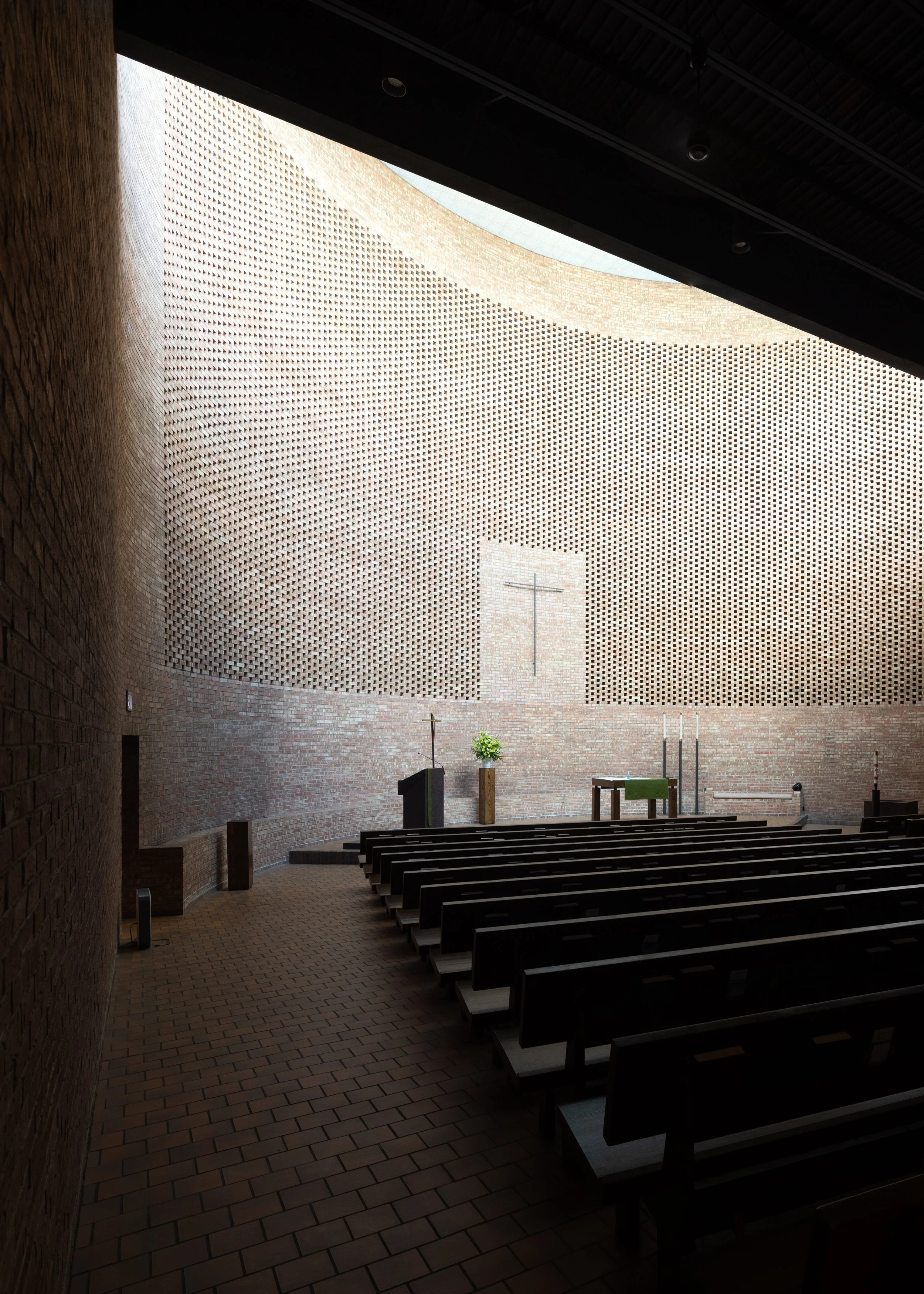
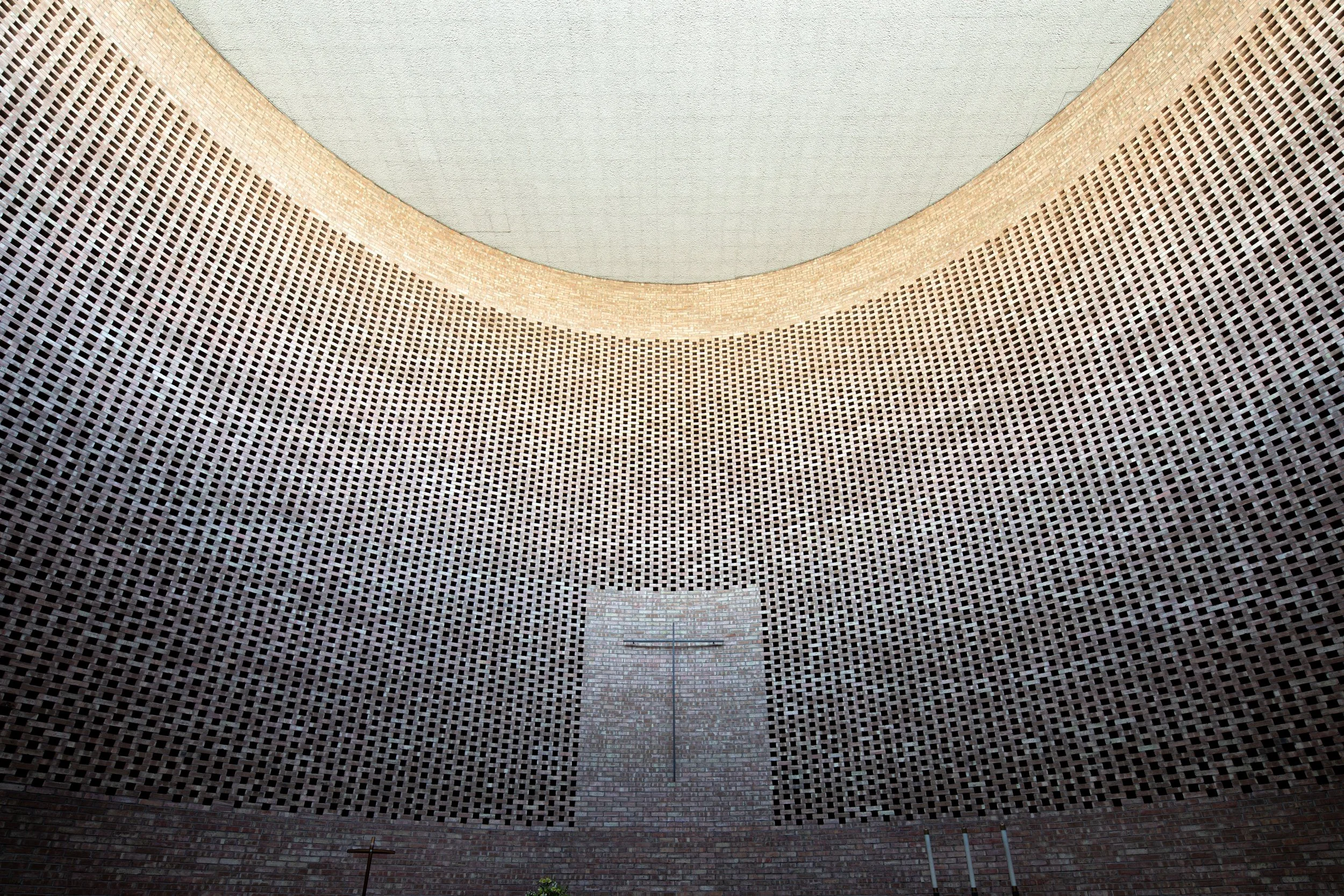
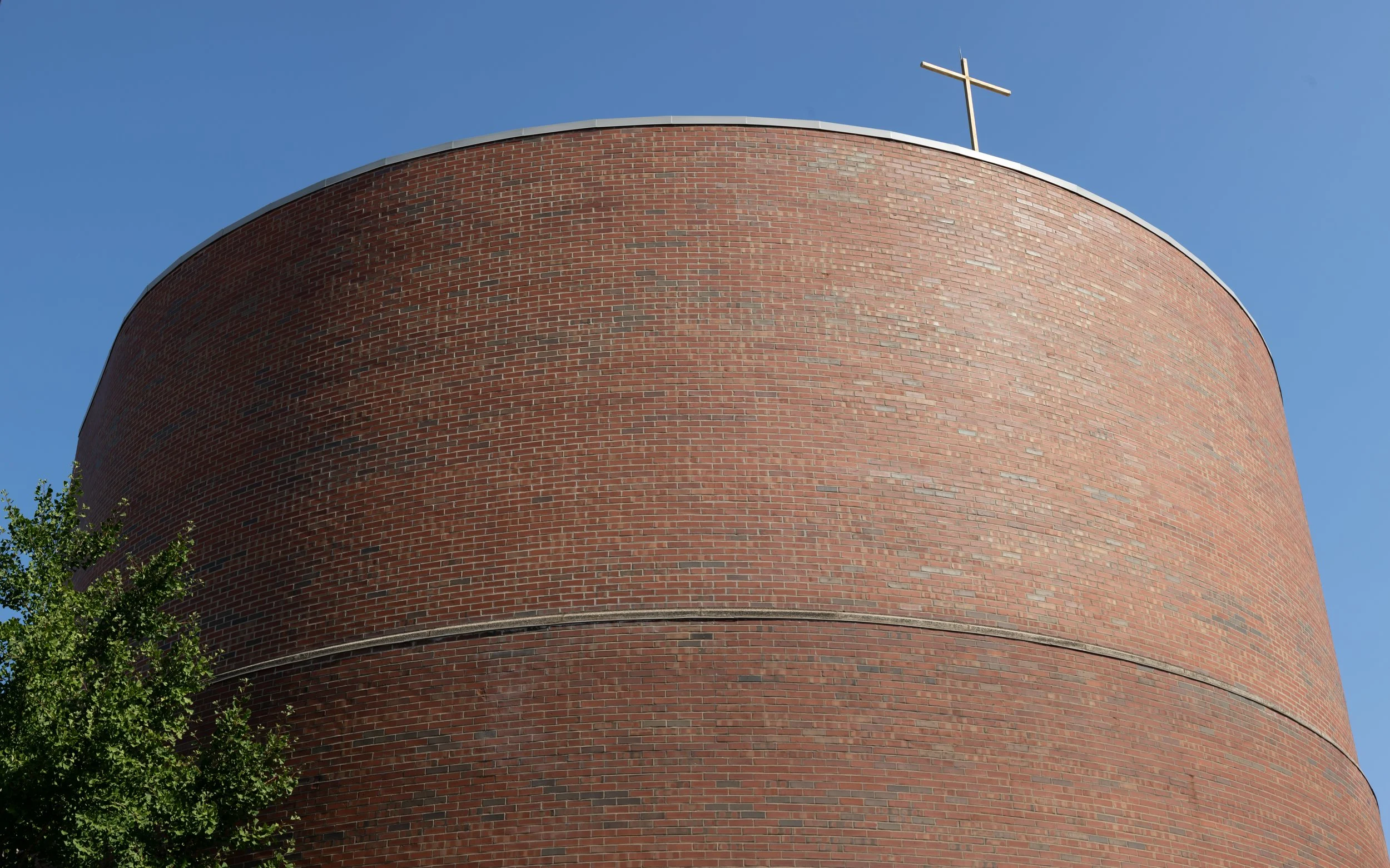
“The church building is by no means the one important aspect of the church," architect Dart told Progressive Architecture magazine in 1966. "Just as man is not the object of worship, so the building cannot be.” On the outside, Dart’s design for First St. Paul’s is certainly nothing to worship. It stretches along La Salle as a two story windowless block of mottled red brick with a wide round facade projecting up at Goethe, all sitting amidst the towering apartments of Sandburg Village.
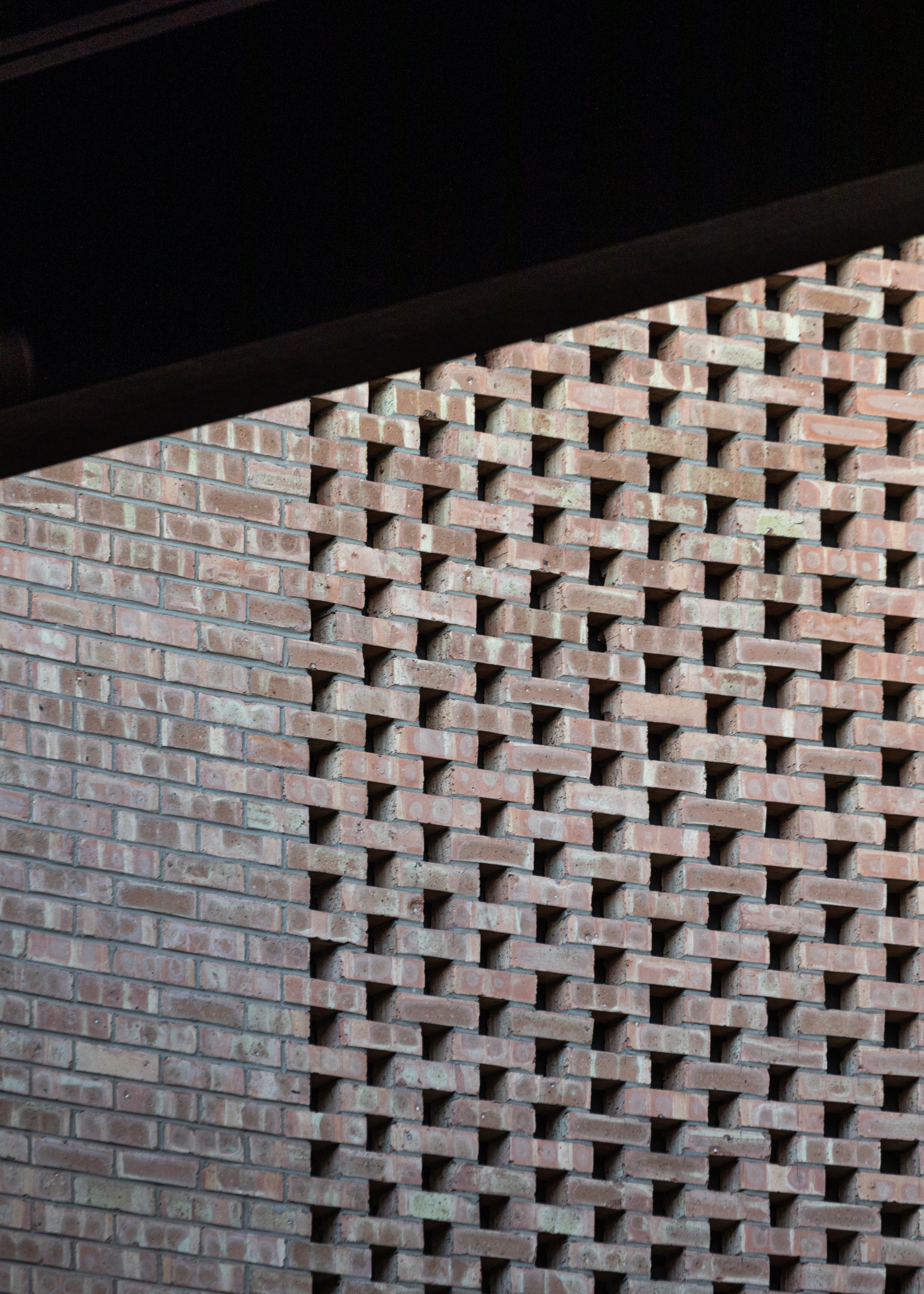
Once you’re inside, however, the ceiling rises to reveal the expansive sanctuary, a cavernous and windowless roomclad in a rough Chicago common brick. Indirect light spills in from above, high windows hidden in the rounded tower, and cascades along the rough bricks. The space is wide open, the walls uncovered. The brick is the only thing that speaks. It has the feeling of standing in an ancient cave. “In its simplicity this is a much more ancient type of worship. It’s really not modern at all, but a reversion to the earliest worship forms,” said First St. Paul pastor James Manz. “Our building addresses all who see it through the eloquent silence of the architecture”
October - Former Schlitz Tavern
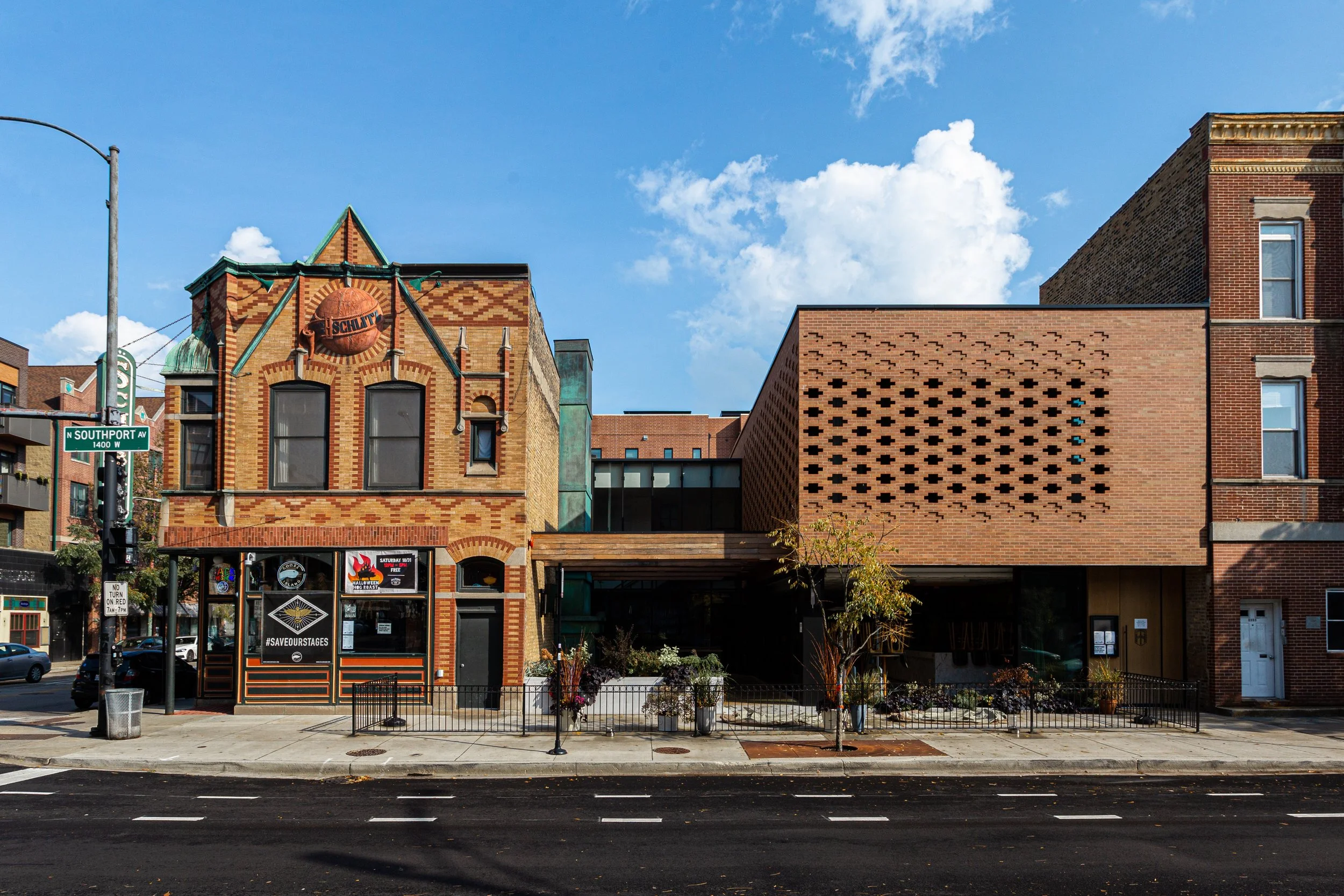
Turn of the century Chicago was dotted with taverns and saloons called Tied Houses—bars operated by breweries. These bars exclusively served that breweries beer and often offered free salty food like pickles and pretzels to encourage more drinking. The breweries placed these tied houses on busy corners in working class neighborhoods to cater to hardworking and thirsty workers. Tied houses died off with prohibition and now made a comeback in the form of brewpubs.
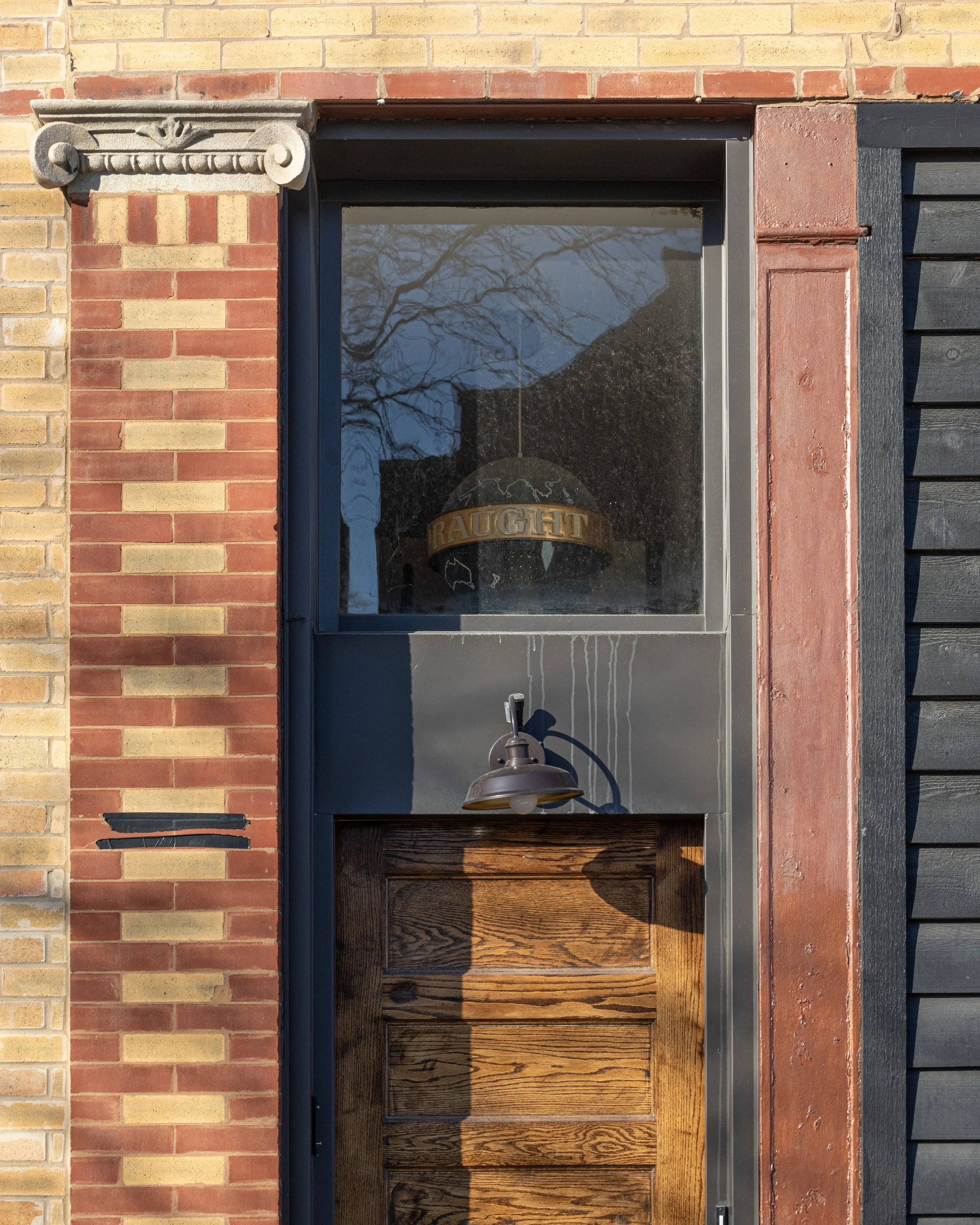
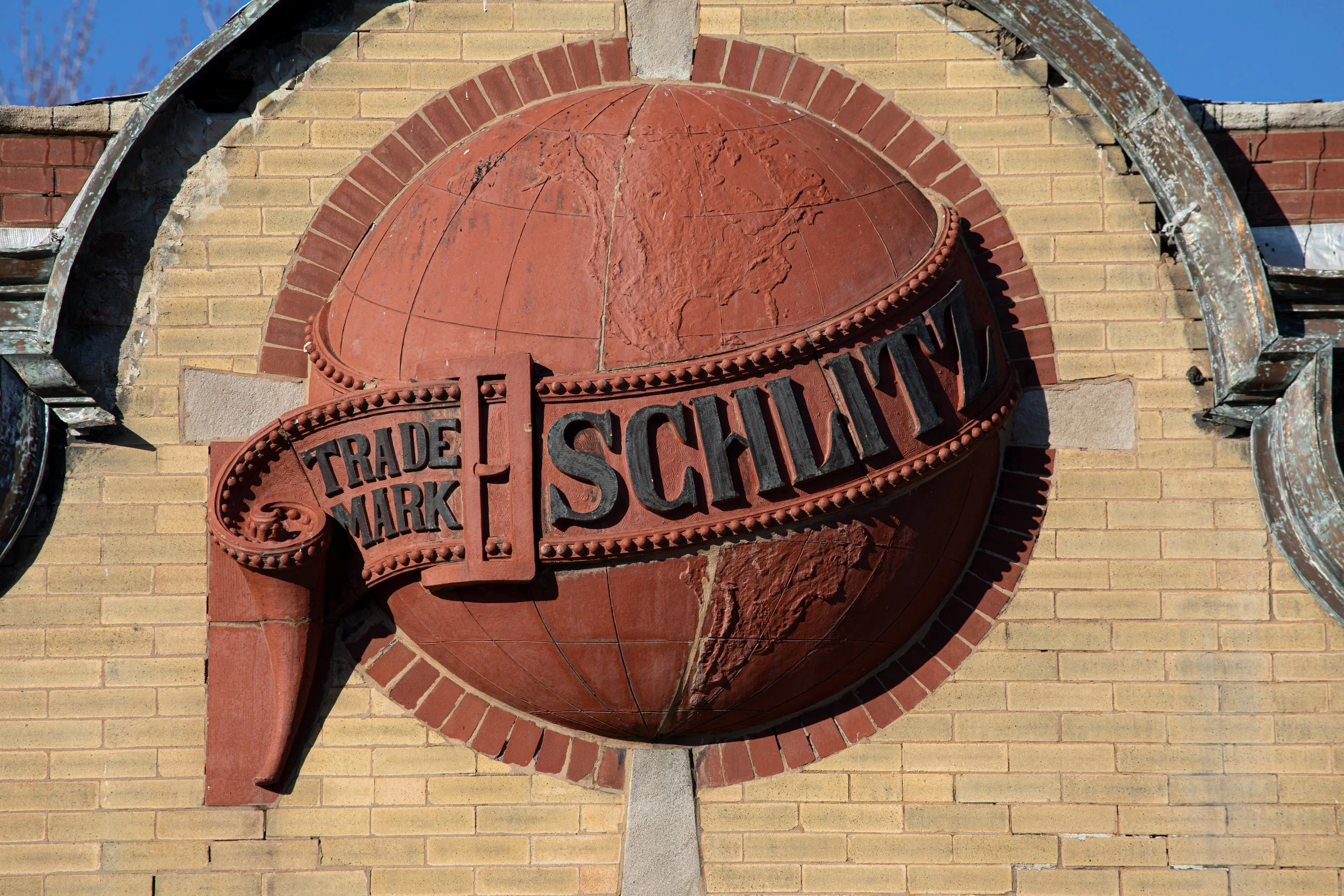
Schlitz was a prolific builder of tied houses and theirs are still readily identifiable thanks to the large red terra cotta Schlitz logo atop the building, usually alongside red and yellow brick. Schubas on Southport is probably the most famous survivor of this era. This former tied house in Little Village was converted into a residence and apartment building a few decades ago and stripped of much of its interior details. Thankfully, most of that stuff was just thrown into the basement and a new owner has come in and is restoring this little gem.
November - Factory
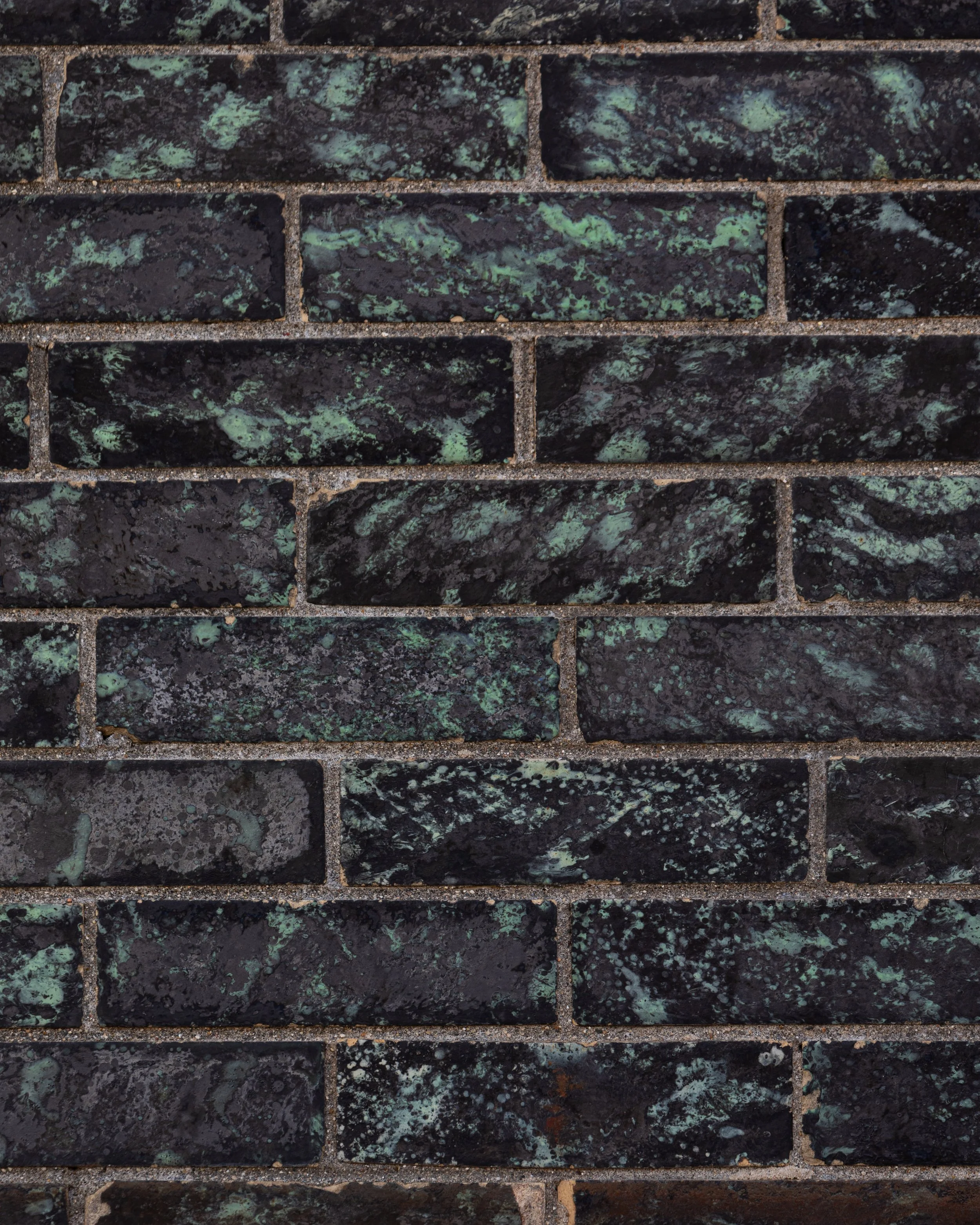
Every year there’s a brick on the calendar that I really can’t figure out at all. This year it’s this one. I can tell you that this is an industrial building built sometime between the 40s and 60s and that these are glazed bricks, but that’s about it! But what an incredible glaze on these bricks! A dark navy like the sea flecked with greenish blue veins almost like marble. It’s just tremendous.

December - Carl Schurz High School
First of all, I goofed and put the wrong address on the calendar. It’s 3601 N Milwaukee. My bad.
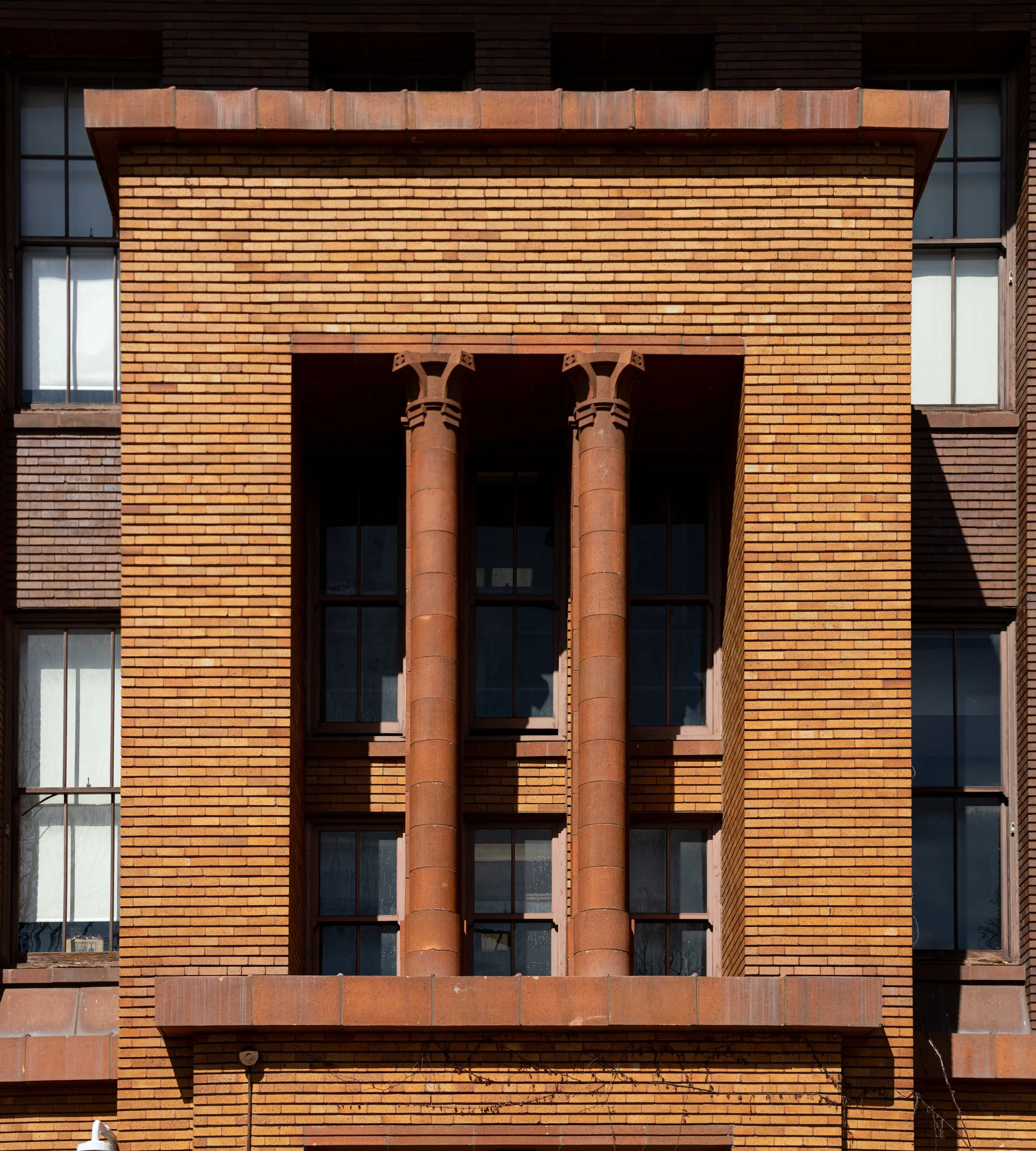
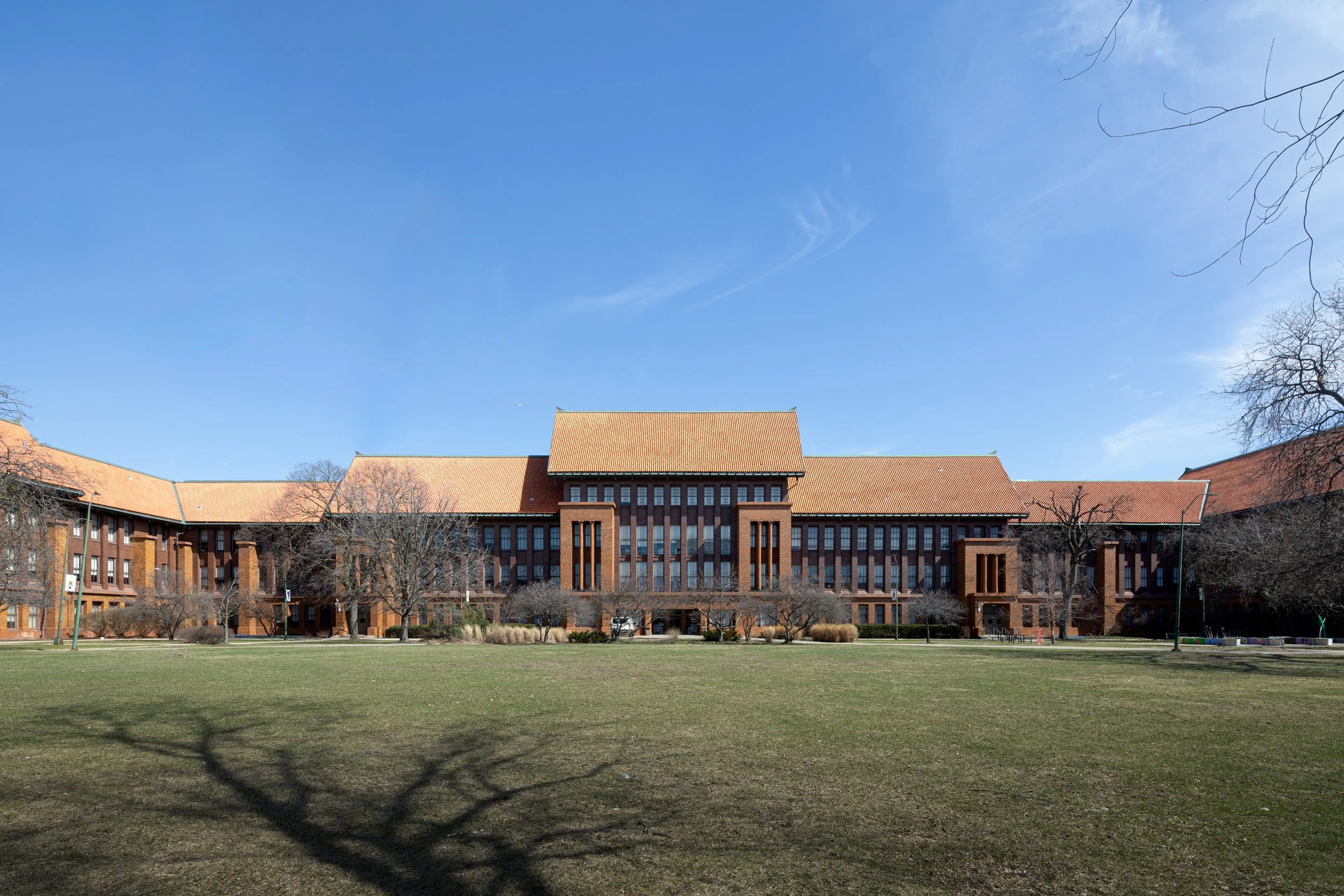
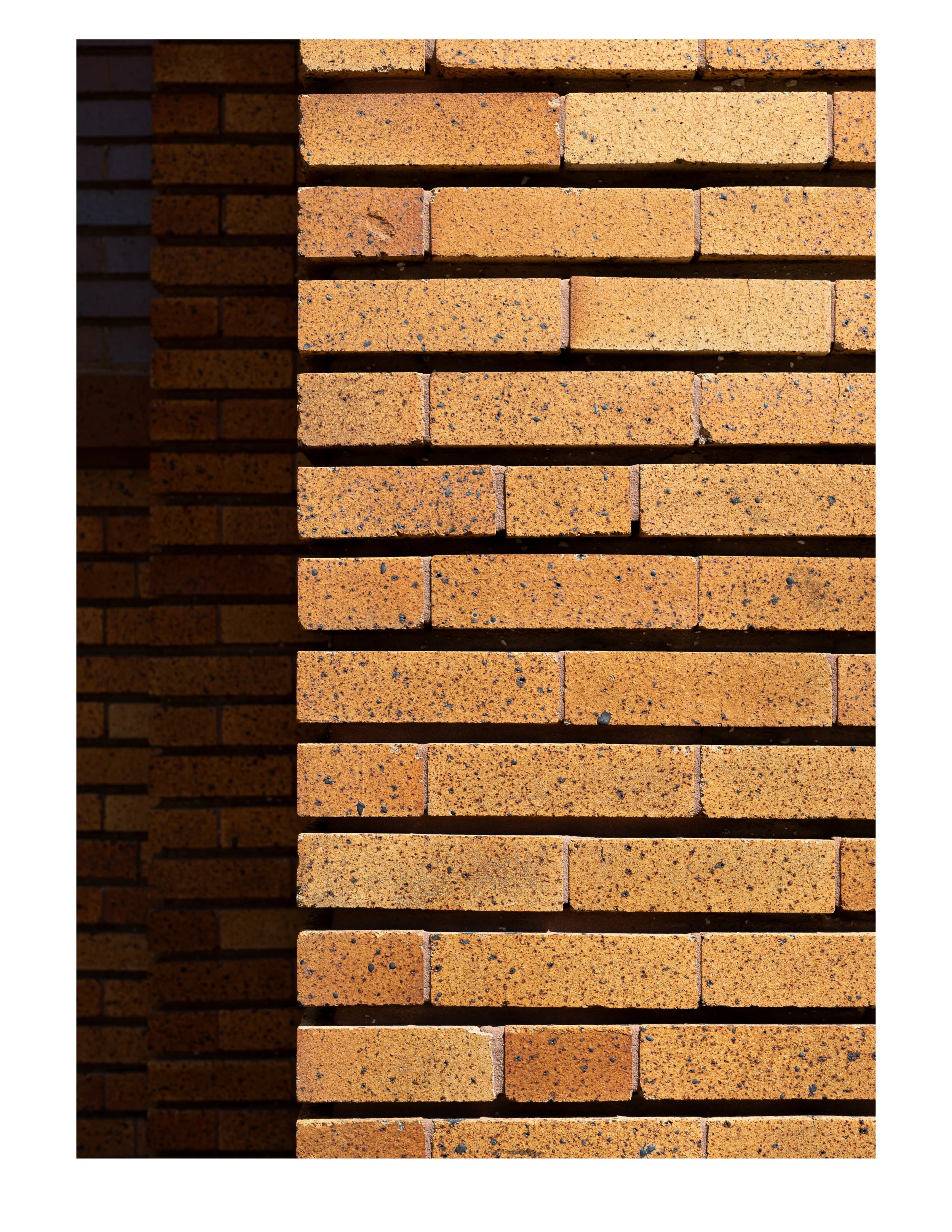
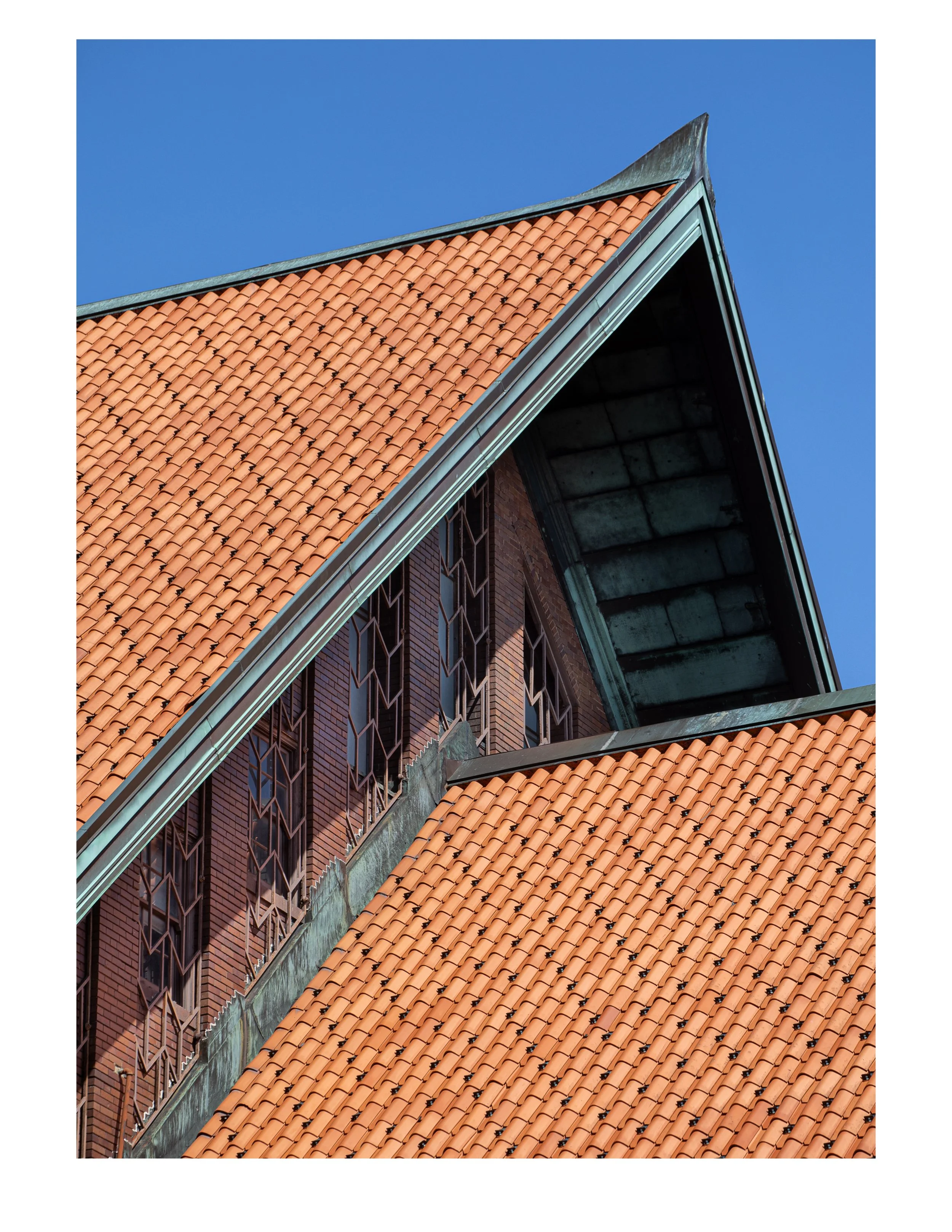
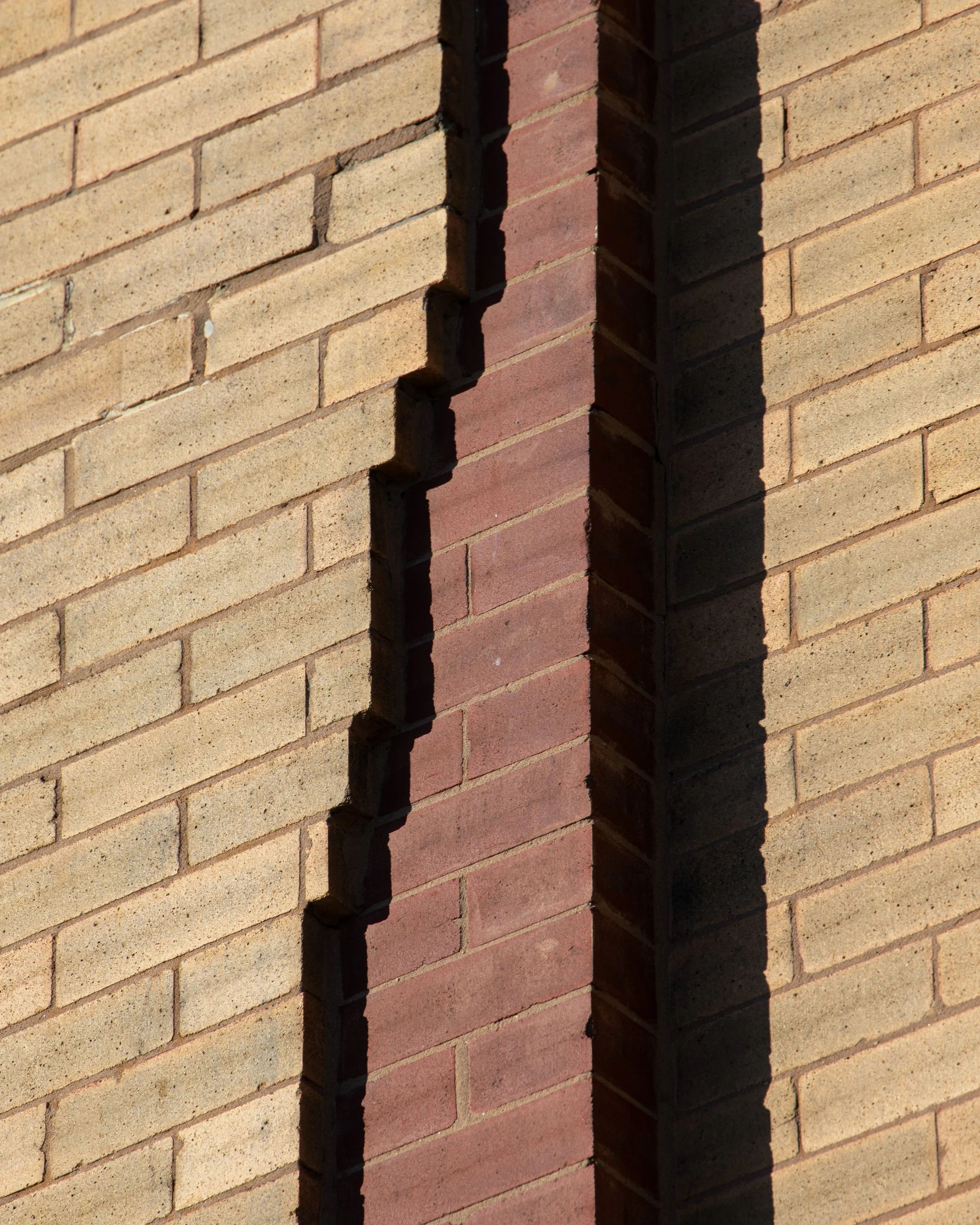
One of my favorite things about Chicago is that it is full of incredible school architecture and those schools are huge and dropped into the middle of a neighborhood. It’s such a departure from what I grew up with in St Paul, MN. Schurz High School, built in 1910, is one of the best, or perhaps just the most famous, of these schools. It is the masterwork of architect Dwight Perkins. The individual sections take their inspiration from office and skyscraper design with an emphasis on windows and verticality while the overall form turns to the Prairie style with its horizontality, aided by the deeply raked mortar joints.
For the brick, Perkins chose rich orange ironspot bricks. All those dots you see across their faces are bits of iron turned to glass in the fire of the kiln. Ironspots were beloved by architects like Perkins and and Frank Lloyd Wright because they look so earthy and give the building a feeling of rising up from the ground.
Schurz also has a twin in South Chicago, Bowen High School. While Schurz’s additions were designed in the same Perkins style, Bowen’s were not, but the main section is the same. It’s worth checking out.